Core
The History of PIM: How Product Information Management Evolved and Where It’s Going Next
Elina · 2025-12-01 · 2 min read
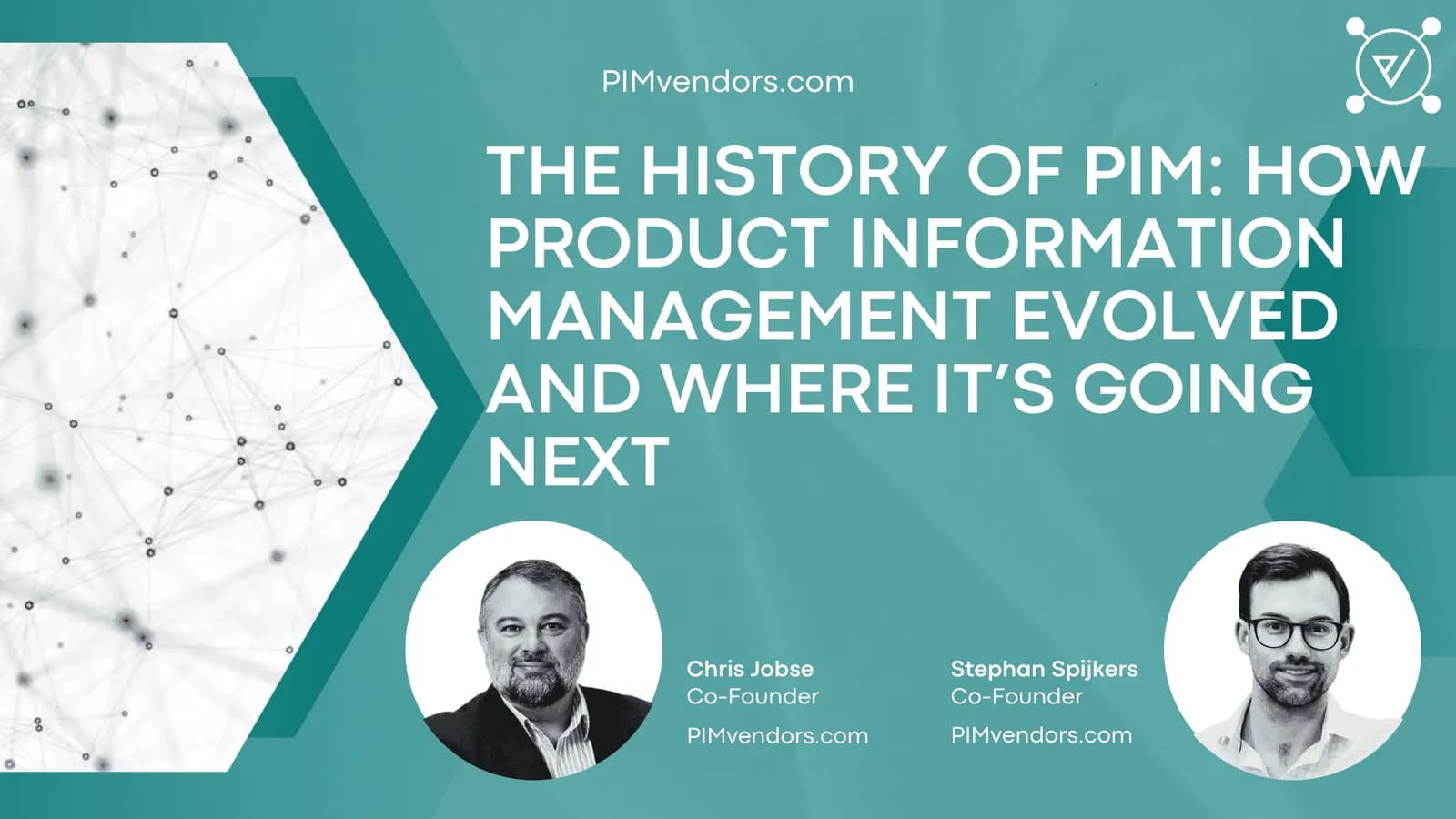
During this PIMvendors Academy session, Stephan Spijkers is joined by co-founder Chris Jobse to explore the full history and evolution of Product Information Management (PIM) - from printed catalogs and Excel files to modern PIM-first architectures and long-tail commerce workflows.
Together, they break down how PIM emerged, how it changed with the rise of e-commerce and marketplaces, and why today’s organizations are shifting toward PIM-first product creation, scalable workflows, and multi-channel data structures.
Speakers:
Stephan Spijkers - Co-Founder, PIMvendors.com
Chris Jobse- Co-Founder, PIMvendors.com
Key Takeaways:
-
PIM began as a way to organize product data for printed catalogs before evolving into a central collaboration tool.
-
Excel was the first “informal PIM,” but it breaks at scale due to version control issues and multi-user conflicts.
-
Modern PIM integrates catalog, e-commerce, marketplace, and DAM needs - each with different data structures.
-
PIM-first architecture allows products to be “born” in PIM, enabling structured attributes, validation rules, and multi-channel readiness.
-
Long-tail product catalogs and drop-shipment processes become far easier to manage in a PIM-first workflow.
-
Proper PIM enables on-demand ERP product creation and automated order flows.
-
Collaboration, guided data entry, and workflow orchestration make PIM the backbone of scalable product information.
Want to dive deeper and discover the best tools, comparisons, and expert advice? Visit PIMvendors.com now - your go-to resource for everything related to Product Information Management.
Diagnostic
Do you actually need a PIM?
Run the complexity index before you budget software or hire an SI.
Budget
Model a first-pass TCO
Translate catalog shape into a three-year cost range in under ten minutes.