
Core
Europe's Packaging Rule Is a Data Problem, Too
Stephan Spijkers · 2026-04-23 · Updated 2026-10-15 · 6 min read
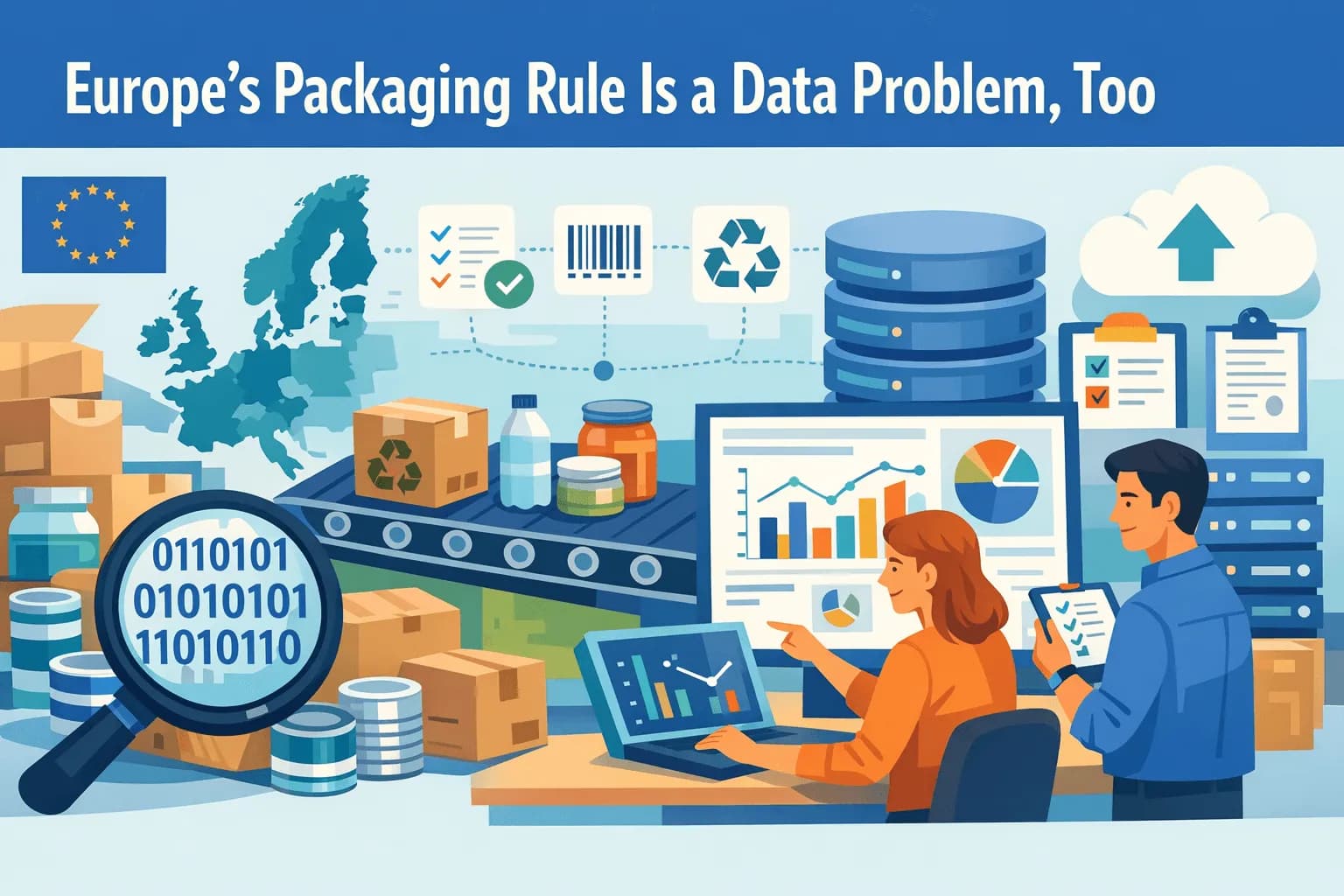
Europe's Packaging and Packaging Waste Regulation (PPWR) crossed a line in early 2025: it stopped being a draft and became law. On paper it is about bottles, boxes and plastic films. In practice it is about data, standards and how every product record sold into Europe has to prove more about its packaging.
PPWR is framed as a circular-economy milestone: less waste, more reuse, more recycling, fewer national loopholes. Under the hood it is a mandatory upgrade to how brands track, structure and share product and packaging information. For PIM, DAM and ERP teams, this is the next release cycle, not a side project.
If you want the lived version of that upgrade - three SKUs sharing one carton, a supplier email, and a missing declaration of conformity - read PPWR is live: your packaging data model is not. This article stays on the regulation and the information architecture it forces.
From directive to regulation
PPWR replaces and extends older rules:
- PPWD (Packaging and Packaging Waste Directive, 1994): recovery and recycling targets, left to each member state. Result: a patchwork of national systems and inconsistent data demands.
- SUPD (Single-Use Plastics Directive): tighter rules on single-use plastics, especially beverage bottles, with reduction and recycled-content obligations.
PPWR does two structural things:
- It replaces the PPWD with a regulation, so the rules apply directly and are harmonised across the EU instead of being rewritten 27 ways.
- It builds on SUPD without overriding it. SUPD stays lex specialis for its scope, while PPWR pulls in recycled-content targets and reporting duties for plastic beverage bottles.
Brands and manufacturers selling into the EU will face the same core rules, data fields and expectations regardless of member state. "We'll handle that locally" is ending. "Configure it once, roll it out everywhere" only works if your systems can hold the packaging facts once.
What PPWR wants from packaging
In concrete terms PPWR pushes:
- Stricter recyclability and design-for-recycling requirements for materials and formats.
- Minimum recycled content targets for specific packaging types, notably plastics.
- Reuse and refill targets for certain sectors, which forces portfolio redesign.
- Higher-quality collection and sorting, including deposit return schemes and improved separate collection.
- Harmonised labelling and reporting, tying physical packaging to machine-readable information.
From a sustainability view that is overdue. From an information-systems view your product record now needs accurate, auditable, portable packaging data for every SKU and market.
Compliance is infrastructure, and infrastructure is data
Near-term challenges look physical: sorting plants, deposit schemes, reuse logistics. Each of them depends on clean, structured, interoperable product and packaging data.
- Identification. Modern deposit and sorting systems need standardised barcodes, digital watermarks or other machine-readable IDs linked to authoritative packaging records.
- Transition cost. Recycled-content and reuse mandates raise cost. Eco-modulated fees reward better design, and regulators need credible structured data from producers to calculate them.
- Value-chain coordination. Brand owners, fillers, converters, recyclers, retailers and waste operators need the same truth about what the package is, what is in it, how it should be treated and who is responsible.
- Imports. Non-EU producers shipping into Europe face the same rules and the same data burden.
Word docs, scattered Excel files and one-off local compliance databases cannot carry that load. This is where PIM and related master-data work move from optional to licensed-to-operate. Our master data management guide explains the governance layer that keeps packaging attributes from drifting across systems.
Deadlines are close enough to hurt
Most heavy PPWR obligations land from the second half of 2026 onward, with staggered timings by provision. That only looks distant until you map real cycles:
- Packaging redesign often runs 18-24 months.
- ERP or PIM re-architecture is often multi-year.
- Data cleanup overruns because nobody knows how bad packaging metadata is until they open it.
Treating PPWR as something "Regulatory will handle later" is already late. Sustainability, packaging development, IT and master data have to audit together: which packaging fields you track today, in which systems, at what quality, against which standards.
Why PPWR is a PIM story
Static, commerce-only product data models are not enough. The definition of a product has to include structured packaging information for every SKU and market. PIM systems increasingly need to hold:
- Material composition for each packaging component (bottle, cap, label, liner, secondary and tertiary packaging).
- Recycled content percentages by material and component, with versioning over time.
- Reusability and recyclability attributes aligned to EU-wide criteria.
- Regulatory classification (which PPWR, SUPD or other rules apply).
- Links to physical identifiers such as barcodes, QR codes or digital watermarks.
That data needs controlled vocabularies, shared taxonomies and clear ownership. Expect more standardised attribute models, and more pressure on vendors to support them out of the box.
From omnichannel to omni-regulation
PIM platforms were built so every sales channel gets correct product information. Under PPWR the audience widens: regulators, recyclers, deposit operators, eco-modulation schemes and B2B partners, not only consumers.
That means multiple regulatory views of the same product, machine-readable standardised exports (CSV and PDF dumps will not do), and near-real-time updates as packaging specs change. Stale regulatory data becomes a compliance risk quickly.
The Digital Product Passport sits next to this story at product level. Our webinar recap on the Digital Product Passport as headache or opportunity shows how DPP and PPWR share the same underlying data foundation, so you do not rebuild packaging and product compliance as two separate projects.
How vendors and stacks will move
Expect PIM vendors to push prebuilt packaging data models, regulatory content packs, audit trails for packaging changes, and integrations with LCA tools, deposit operators and EPR schemes. Vendors that treat sustainability attributes as core master data will pull ahead of those that bolt them on later.
Packaging specs often live in PLM or ERP while PIM owns commercial content. PPWR blurs that line. Companies will need tighter PLM-ERP-PIM flows, shared governance across engineering, compliance and marketing, and a named owner of "packaging truth." Our PLM and PIM integration guide covers how released engineering data should reach the commercial record once.
DAM joins quietly: versioned packaging artwork tied to specific configurations, localised compliance labelling, and assets for deposit and reuse schemes. The link between the official packaging spec and the graphic on the shelf has to be explicit.
From burden to product advantage
PPWR can stay a compliance headache, or packaging data can become a competitive asset:
- Design feedback. Material choices, recyclability scores and reuse performance as structured data inform better design and procurement.
- Transparency. Credible environmental and circularity data at product level helps in B2B tenders and with sceptical consumers.
- Collection and sorting. Advanced take-back systems feed machine-readable IDs and data back into operations.
Looking ahead, expect more vertical PIM solutions for packaging-intensive industries, stronger standards work around packaging taxonomies, embedded compliance checks inside PIM workflows, and closer cooperation between PIM, PLM and sustainability platforms.
PPWR does not only force companies to rethink packaging. It forces the software stack to rethink what it means to know a product - and to keep that knowledge current when the rules get stricter.
Diagnostic
Do you actually need a PIM?
Run the complexity index before you budget software or hire an SI.
Budget
Model a first-pass TCO
Translate catalog shape into a three-year cost range in under ten minutes.