
Core
PLM and PIM Integration: One Product Lifecycle Strategy
Stephan Spijkers · 2025-03-09 · Updated 2026-10-09 · 16 min read
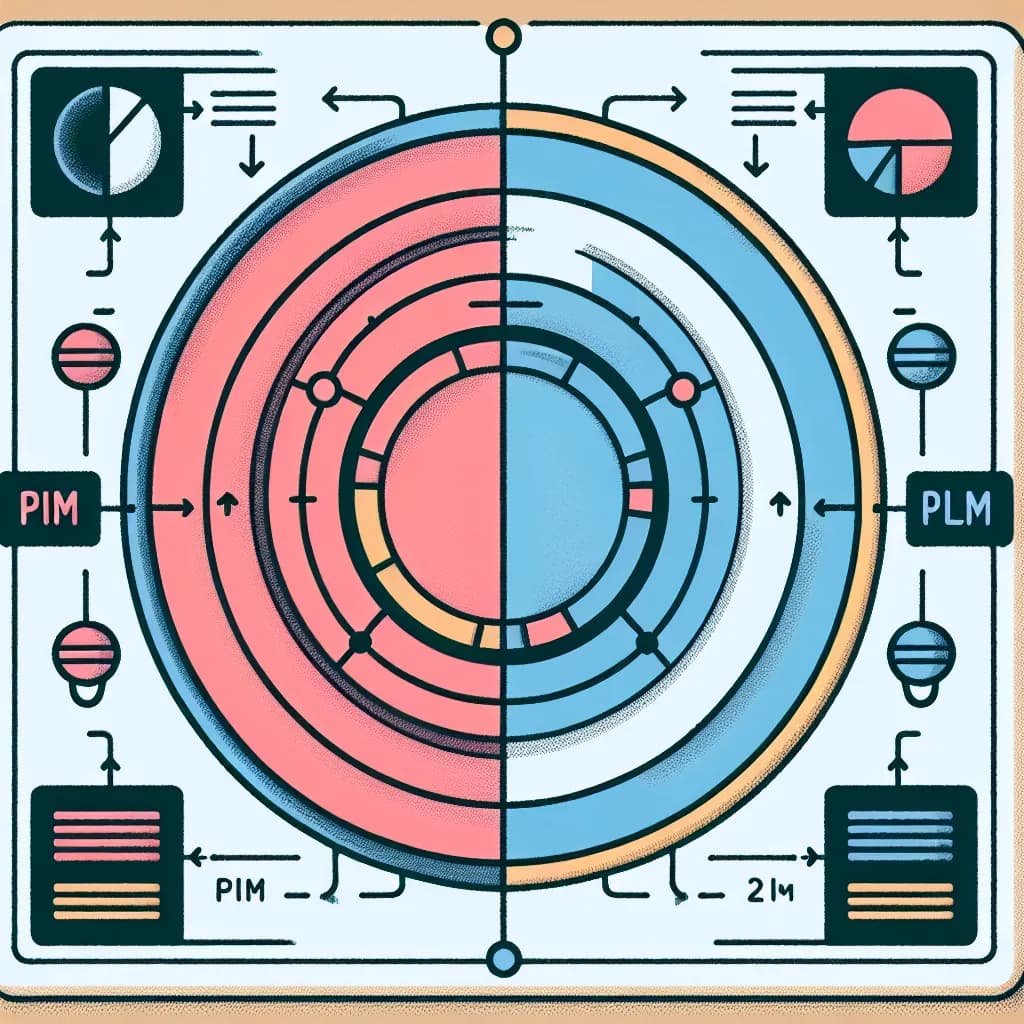
Product lifecycle management (PLM) and product information management (PIM) both hold product data, for different people. PLM follows the product through its development, from idea to end of life, for design and engineering. PIM holds the current product information and hands it to marketing, sales and the channels.
Integrating the two gives one product lifecycle strategy: design data becomes sellable product information, without a duplicate record in between. This article starts with what PLM is, then covers why PLM and PIM belong together, how to implement the integration, and the problems teams run into.
What Is Product Lifecycle Management (PLM)?
A PLM system follows a product for its whole life: the idea, design and prototyping, manufacturing and release, the service required after the sale, and the disposal of what never sold.
Product lifecycle management (PLM) is that process, applied as a way of running the product. The aims are a shorter time to market (TTM), lower development cost, better quality, new markets, and a smaller environmental impact at end of life (EOL). PLM systems provide a collaborative environment that allows stakeholders across different domains to contribute to product development and management.
The Four Phases of the Product Life Cycle
Every product that reaches the market moves through four phases, described as the product life cycle (PLC): development, growth, maturity, and decline. A phase can last weeks or decades. Some products never reach the market and so never pass through every phase. A product that does reach the market eventually declines.
Where PLM Comes From
American Motors Corporation (AMC) started PLM in 1985 (Product lifecycle management - From its history to its new role). The automaker wanted to compete faster: shorter innovation cycles and a shorter time to market. PLM is now used in almost every sector.
What PLM Systems Do
PLM systems help an organization handle rising complexity and technical work. They hold information about developments, markets, techniques, processes, and the organization itself. That is how they support the management of a product or a service in each of the four phases. To keep a launch from breaking, PLM is used together with Design for Six Sigma.
Typical parts of a PLM setup:
- Design collaboration tools: support communication between designers and engineers on the product design.
- Cloud-based PLM systems: offer remote access, with real-time updates and collaboration.
- Lifecycle analytics tools: give insight into each phase of the product lifecycle for better decisions.
The role of PLM systems extends beyond mere data management. They integrate with other enterprise solutions like ERP (Enterprise Resource Planning) and SCM (Supply Chain Management), fostering a cohesive organizational ecosystem. This integration ensures that all departments have access to consistent data, which is crucial for informed decision-making and efficient operations.
Product data management (PDM), the technical data store that PLM often grows out of, is covered in What is product data management (PDM)?.
Why Use PLM
Put PLM into the working process and the organization can see each phase instead of discovering it at the next handover. The system does two jobs. It collects the product information. It is also the channel between marketing, engineering, production, and support.
Implemented with the knowledge and the resources to run it, the result is better outcomes, higher customer satisfaction, and less time wasted. An Autodesk study of mechanical engineering companies found that successful PLM integration made companies more profitable, more efficient, and more innovative. On average, organizations using a PLM system generated 10% more sales and 7% lower costs than other mechanical engineering companies, and they lost 7% less time on data management, which is time they could spend on the product.
PLM Versus PIM
Product information management (PIM) is often put in the same comparison. The split is the job. PLM follows the life cycle and the development of the product. PIM works at the level of the current product information and how that information is handed to the customer. Because each system owns a different part of the same product, the two need to be connected. The rest of this article is about that connection.
The Role of PLM in Digital Transformation
The digital era demands agility and innovation - a sentiment echoed by many industry leaders. In this context, PLM solutions serve as catalysts for transformation by enabling end-to-end visibility of product data. This transparency helps organizations respond swiftly to market demands while maintaining quality standards.
"Leveraging the power of digitalization is no longer optional; it's essential for survival in competitive industries." - Siemens Digital Industries Software
This paradigm shift isn't just about adopting new technologies; it's about reimagining business processes. For example, the implementation of product information management principles within a PLM framework can result in improved regulatory compliance management and agile engineering change management practices.
A Case in Point: The European Market
Surprisingly - or perhaps not so surprisingly - the Netherlands has been at the forefront of adopting smart manufacturing systems powered by advanced PLM software. Companies here prioritize sustainability alongside innovation, leveraging industrial IoT solutions for comprehensive lifecycle tracking.
The Importance of PIM in Product Data Management
In the complex ecosystem of product lifecycle management (PLM), the role of Product Information Management (PIM) is akin to being the silent yet strategic director behind a blockbuster production. While PLM systems orchestrate the grand opera of product development, PIM ensures every note of product data hits the right pitch across all channels. Without it, you'd be left with a cacophony rather than a symphony.
PIM: The Unsung Hero of Data Harmony
PIM stands as a pivotal player in product data management, ensuring that accurate, consistent, and enriched product information is available across various platforms. This forms the foundation for effective digital transformation initiatives and drives operational excellence.
-
Centralized Data Management: With PIM, businesses can create a single source of truth for all product-related information. This minimizes discrepancies and enhances efficiency in collaborative product development.
-
Regulatory Compliance Management: Particularly critical for industries under stringent compliance mandates, PIM ensures that all necessary product data meets regulatory standards without breaking a sweat - or a regulation.
-
Enhanced Customer Experience: Accurate and comprehensive product data translates into better customer experiences both online and offline - because nobody enjoys finding out that "red" was more like "magenta."
Moreover, harnessing the power of PIM enables seamless integration with other enterprise systems such as ERP and supply chain management solutions, facilitating an end-to-end cohesive approach to business operations. It's akin to being gifted with a Swiss Army knife in the wilderness of data management - versatile and indispensable.
"The Power of Governance in Product Information Management cannot be overstated; it not only supports operational activities but also enhances strategic decision-making processes." - The Power of Governance in Product Information Management: A Guide for C-Level Executives of SMEs - PIMvendors
As businesses push towards smarter manufacturing systems fueled by Industrial IoT solutions, integrating PIM becomes even more crucial. It ensures that every cog in the machine - from CAD integration in PLM to supply chain integration - functions seamlessly without any hiccups or outdated spreadsheets holding things up like an overcooked noodle.
The Need for PLM and PIM Integration
Integrating PLM systems with Product Information Management (PIM) solutions is not just beneficial - it's essential. The relationship between these two systems can significantly enhance a company's ability to manage product data efficiently.
Bridging the Gap: From Design to Market
PLM systems focus on managing the entire lifecycle of a product from inception, through engineering design and manufacturing, to service and disposal. In contrast, PIM solutions are primarily concerned with centralizing and harmonizing all product information needed for marketing and sales purposes. When integrated effectively, these systems ensure that accurate product data is available across all departments.
-
Holistic Visibility: By integrating PLM with PIM, businesses gain unprecedented visibility across all stages of a product's lifecycle, from initial concept through manufacturing process improvement to end-of-life.
-
Enhanced Collaboration: By uniting PLM and PIM, companies foster better collaboration between engineering and marketing teams. This integration facilitates smoother transitions from product development stages to market launch.
-
Improved Data Consistency: A unified strategy ensures that all stakeholders have access to consistent and up-to-date product data, reducing errors significantly.
-
Accelerated Time-to-Market: With streamlined processes enabled by PLM-PIM integration, companies can bring products to market faster without compromising on quality or compliance.
The need for such integration becomes even more apparent when considering the complexities of supply chain integration and enterprise resource planning (ERP). Both PLM and PIM solutions must communicate efficiently not only within their own frameworks but also with external systems that handle supply chain logistics and regulatory compliance management.
The European Perspective
The demand for robust PLM-PIM integration is especially pronounced in regions like the Netherlands, where market trends point towards embracing cloud-based PLM systems. According to recent studies, Dutch companies are increasingly adopting agile PLM processes to stay competitive in a rapidly evolving global marketplace.
This trend is reinforced by European Union regulations mandating stringent data governance practices - a topic we've explored in detail in our guide on The Power of Governance in Product Information Management.
Ultimately, the seamless integration of these tools represents an opportunity not only to enhance operational efficiency but also to drive innovation in product configuration management, lifecycle analytics tools, and smart manufacturing systems. For businesses seeking sustainable growth through digital strategies, ignoring this need could mean falling behind competitors who harness the full power of integrated product lifecycle strategies.
Implementing a Successful Integration Strategy
Integrating Product Lifecycle Management (PLM) systems with Product Information Management (PIM) systems can feel like orchestrating a symphony where data is the melody, and collaboration is the rhythm. A successful integration strategy requires careful planning and execution, blending technical know-how with strategic vision.
1. Define Clear Objectives
Start by setting clear objectives for your integration. Are you looking to enhance product data management or improve supply chain integration? Understanding the desired outcomes helps in designing a roadmap that aligns with your business goals, be it innovation management or regulatory compliance management.
2. Leverage Collaborative Tools
In today's digital transformation era, leveraging collaborative product development tools can significantly smoothen the integration process. These tools enable seamless communication among cross-functional teams, from engineering change management to marketing, ensuring everyone is on the same page.
"The most efficient integration strategies are those that harness the power of collaboration and clear communication across all levels of an organization."
3. Ensure Data Consistency
A vital aspect of PLM and PIM integration is maintaining data consistency across platforms. This involves implementing robust data governance practices to ensure accuracy and integrity in product information management. For more insights, check out our guide on The Power of Governance in Product Information Management.
4. Invest in Agile Processes
-
Flexibility: Agile PLM processes allow for quicker adaptation to market trends, especially relevant in dynamic markets like the Netherlands.
-
Continuous Improvement: Regular feedback loops help refine processes and address any bottlenecks swiftly.
-
User-Centric Design: Focus on user experience to drive adoption across departments.
An example of successful integration can be seen in companies leveraging cloud-based PLM systems for enhanced scalability and cost-efficiency. These solutions support sustainable product development by connecting lifecycle analytics tools with Internet of Things (IoT) capabilities for real-time insights.
5. Monitor and Optimize
The journey doesn't end with implementation; it's merely the beginning! Utilize lifecycle analytics tools to monitor performance regularly and optimize strategies as needed. This approach not only enhances project portfolio management but also ensures alignment with European Union regulations.
A well-executed PLM-PIM integration strategy not only streamlines your operations but also opens up new avenues for innovation and growth in today's competitive landscape.
Overcoming Integration Challenges
In the quest for a unified product lifecycle strategy, integrating PLM systems with PIM solutions is akin to making a gourmet soufflé - it looks impressive on paper, but getting it just right can be challenging. The integration process often encounters roadblocks that can thwart even the most robust digital transformation plans. Here's how to navigate these choppy waters.
Identify Key Data Touchpoints
A successful integration begins with identifying where data needs to flow between PLM and PIM systems. These touchpoints could include:
-
Product Design Specifications: Ensure design data seamlessly transfers from your CAD tools into PIM for enriched product descriptions.
-
Bills of Materials (BOM): Streamline the movement of BOM details from PLM to PIM, enhancing supply chain integration.
-
Regulatory Compliance Data: Facilitate easy access to compliance information across all platforms for improved regulatory compliance management.
Create a Robust Data Governance Framework
The power of governance in product information management cannot be overstated. Establishing clear policies and protocols for data management will ensure consistency and accuracy across your integrated systems. For more insights on effective governance strategies, consider exploring our detailed guide on The Power of Governance in Product Information Management.
Smooth Sailing with Cloud-Based Solutions
Cloud-based PLM systems can significantly simplify the integration process by providing scalable and flexible solutions that adapt to changing business needs. These systems offer seamless updates and minimal downtime, ensuring that your product data management processes keep pace with modern demands. Notably, businesses adopting cloud solutions have reported enhanced agility in their product lifecycle management processes.
Cultivate Cross-Departmental Collaboration
The importance of cross-departmental collaboration cannot be understated when integrating PLM and PIM solutions. Encouraging open communication between engineering, marketing, and IT teams ensures streamlined processes and minimizes disruptions throughout the integration journey. After all, successful collaborative product development hinges on everyone playing nice in the sandbox!
Tackle Resistance to Change with Education
An often-overlooked aspect of integration is user resistance. To combat this, educate your team on the benefits of a unified product lifecycle strategy - from improved innovation management to smarter manufacturing systems powered by IoT technologies.
Your Integration Blueprint Awaits!
The integration challenges are numerous but not insurmountable. By focusing on key touchpoints, leveraging cloud-based solutions, fostering cross-departmental collaboration, and implementing strong governance frameworks, you too can achieve seamless integration between your PLM and PIM systems in no time - and perhaps even impress at your next company potluck!
Case Studies: Successful Integrations in Practice
Creating a unified product lifecycle strategy through PLM and PIM integration isn't just a theoretical exercise - businesses around the world have already paved the way with inspiring success stories. Let's dive into a few fascinating case studies that highlight the transformative power of integrating PLM systems with robust PIM solutions.
Transforming Supply Chain Efficiency at a Leading European Manufacturer
A prominent European manufacturing giant faced challenges with their legacy systems, resulting in fragmented product data and inefficient supply chain processes. By integrating their existing PLM software with a PIM solution, they streamlined their supply chain integration, significantly reducing time-to-market.
-
Challenge: Disparate product data across departments.
-
Solution: Implemented seamless PLM-PIM integration.
-
Results: Shorter product launch times and better collaboration between departments.
Boosting Innovation Management in the Netherlands
A Netherlands-based tech company, known for its rapid innovation cycles, sought to enhance their innovation management and design collaboration processes. By adopting cloud-based PLM systems integrated with advanced PIM tools, they not only managed to optimize product design but also fostered an environment of agile PLM processes.
-
Challenge: Need for faster design iteration cycles and regulatory compliance management.
-
Solution: Utilized cloud-based PLM systems providing Dutch-language support combined with comprehensive PIM solutions.
-
Results: Faster design iterations while staying compliant with European Union regulations.
Pioneering Smart Manufacturing Systems in Electronics
"Integrating PLM technologies within our manufacturing processes has revolutionized our approach to innovation." - CTO
An electronics company embraced smart manufacturing systems by unifying their PLM solutions with industrial IoT applications. This integration enabled real-time lifecycle analytics and improved engineering change management across their product lines, offering unprecedented visibility into production metrics.
-
Challenge: Lack of real-time data insights during production phases.
-
Solution: Integrated IoT solutions for enhanced data-driven decision-making within PLM frameworks.
-
Results: Better production quality assurance metrics and lower overhead costs through preventive maintenance.
Conclusion
Integrating PLM systems and PIM solutions is akin to conducting a well-orchestrated symphony, ensuring that every department from design to distribution is playing in harmony. As businesses navigate the turbulent waters of digital transformation, the synergy between Product Lifecycle Management (PLM) and Product Information Management (PIM) becomes even more critical. This integration not only streamlines product data management but also enhances collaboration across various stages of the product lifecycle, from conception to market deployment.
In recent years, the demand for agile PLM processes has surged, particularly within the Netherlands market. This trend reflects a broader shift towards rapid adaptation to market demands, emphasizing the necessity for a unified strategy that incorporates product configuration management and regulatory compliance management. According to Industry Week, companies that have successfully integrated their PLM and PIM systems report up to a 30% improvement in time-to-market efficiency - a testament to the power of cohesive product data management strategies.
Moreover, cloud-based PLM systems have emerged as game-changers in this realm, offering unparalleled flexibility and scalability. They enable real-time updates and foster innovation management by allowing global teams to collaborate seamlessly. As companies increasingly leverage Internet of Things (IoT) technologies within their PLM frameworks, there is a growing emphasis on smart manufacturing systems and sustainable product development.
"The integration of PLM and PIM solutions offers an end-to-end product development solution that harmonizes both engineering change management and supply chain integration." - TechCrunch
The advantages of such integration are manifold:
-
Enhanced Design Collaboration: Facilitates collaborative product development with design collaboration tools.
-
Improved Product Quality Assurance: Streamlines lifecycle analytics tools for better quality control.
-
Smooth Enterprise Resource Planning Integration: Ensures seamless data flow across enterprise systems.
-
Simplified Regulatory Compliance: Aids in staying ahead of ever-evolving European Union regulations.
A seamless PLM-PIM integration not only strengthens your competitive edge but also empowers organizations to make data-driven decisions that propel growth.
The journey towards creating a unified product lifecycle strategy isn't just about adopting new technologies - it's about reimagining how your organization collaborates, innovates, and thrives in today's digital age. As you embark on this path, remember that with the right guidance, your business can orchestrate a symphony of success where every note resonates with precision and purpose.
Any PLM or PIM question that was not covered by our articles, or a specific question of your own? Reach us at info@pimvendors.com.
Frequently asked questions
What is product lifecycle management (PLM)?
Product lifecycle management (PLM) follows a product for its whole life: the idea, design and prototyping, manufacturing and release, service after the sale, and disposal. The aims are a shorter time to market, lower development cost, better quality, new markets and a smaller environmental impact at end of life.
What are the four phases of the product life cycle?
Development, growth, maturity and decline. A phase can last weeks or decades, and a product that never reaches the market does not pass through every phase.
Who started PLM?
American Motors Corporation (AMC) started PLM in 1985. The automaker wanted shorter innovation cycles and a shorter time to market. PLM is now used in almost every sector.
What is the difference between PLM and PIM?
PLM follows the life cycle and the development of the product, for design and engineering. PIM works on the current product information and how that information is handed to the customer through marketing and sales channels.
Why integrate PLM and PIM?
Integration gives engineering and marketing the same up-to-date product data, which improves collaboration, reduces errors and speeds the move from development to market launch. It also helps when product data has to meet regulatory requirements.
Which data should flow from PLM to PIM?
The usual touchpoints are product design specifications from CAD tools, bills of materials (BOM), and regulatory compliance data. Map these flows before you build the integration.
Diagnostic
Do you actually need a PIM?
Run the complexity index before you budget software or hire an SI.
Budget
Model a first-pass TCO
Translate catalog shape into a three-year cost range in under ten minutes.