
Core
What Does MDM Stand For? Master Data Management Guide
Stephan Spijkers · 2025-06-20 · Updated 2026-10-14 · 6 min read
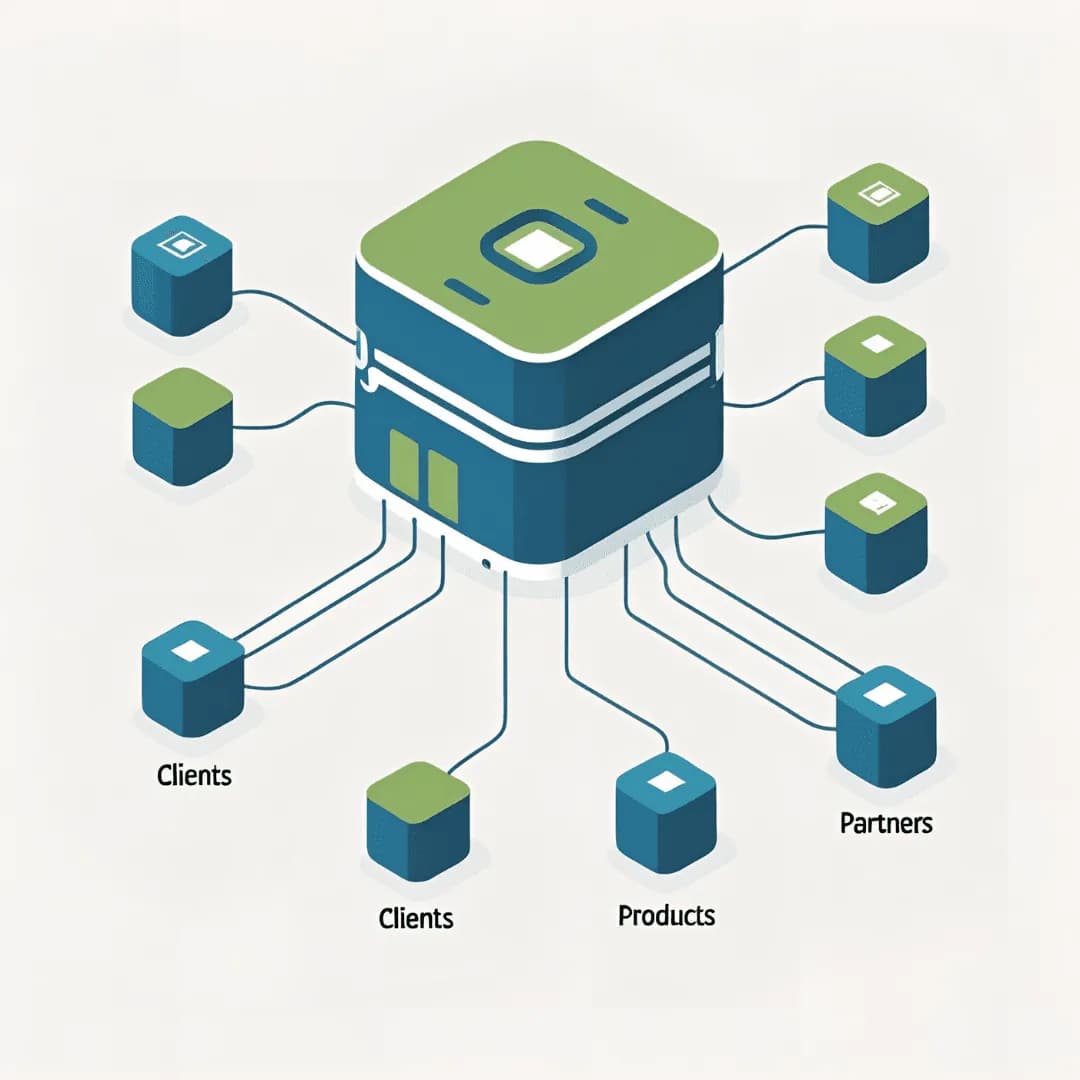
MDM stands for master data management: the processes, governance, policies and technology a company uses to keep one trusted version of its core records. Those records are usually customers, products and suppliers. If your problem is mainly product content for channels, you probably need a PIM rather than a full MDM program. The rest of this guide explains how to tell the two apart.
There is a second MDM in IT, mobile device management. It has nothing to do with data quality. It is the software IT uses to secure the phones, tablets and laptops employees work on. When a vendor, recruiter or analyst report says "MDM", check which one they mean before you read on.
What master data management actually covers
Master data is the small set of records every other system depends on. An order references a customer, an invoice references a supplier, a webshop page references a product. When three systems each keep their own copy of that customer, the copies drift apart. MDM is the discipline of deciding which version is right and keeping it right.
In practice it rests on three things:
- Data governance. Policies that say who owns a record, who may change it and what "complete" means.
- Data quality. Checks that keep values accurate and consistent across datasets. Our guide to data quality breaks down the dimensions you would actually measure, so read it before you write your first validation rule.
- Data integration. Connecting the source systems so the trusted record flows back out to them.
If you want the principles behind these three in more depth, read our article on the basic principles of master data management. It covers the governance and stewardship side that this article only touches on.
Mobile device management, briefly
Mobile device management enforces security policies on devices, controls which users can access what, and lets IT remotely wipe a lost or stolen laptop. Remote work and bring-your-own-device policies made it standard IT equipment. It shares an acronym with master data management and nothing else.
What MDM changes for the business
The core promise is a single source of truth. Duplicates and conflicting versions of a customer, product or supplier are consolidated into one record. That has four concrete effects:
- Fewer reconciliation hours. Teams stop spending time working out which spreadsheet is current, and reports from different departments start to agree.
- Better decisions. Forecasts and trend analysis are only as good as the records underneath them.
- Better service. Accurate customer profiles make personalised marketing possible and let service staff answer an order question on the first call.
- Easier compliance. Regular audits and clean master data make regulatory reporting faster and reduce the risk of reporting outdated values.
None of this needs a big vendor platform on day one. It needs an owner for each record type.
Where MDM ends and PIM begins
Most of the readers who reach this article are dealing with product data. A PIM manages the rich product content that marketing and e-commerce need: descriptions, attributes, images, translations and channel-specific versions. MDM manages the core identity of the product, and of customers and suppliers too, across the whole enterprise.
Many mid-market companies discover they need a PIM next to their ERP, not a multi-domain MDM. Our article on where ERP stops and PIM starts draws that line attribute by attribute. If you are still unsure what a PIM covers, start with what a PIM system is.
Why MDM projects stall
The technology is rarely what stops an MDM project. These five issues are:
- Data silos. Departments run their own databases. Legacy systems often do not connect easily to a modern MDM platform, and people used to their own tools resist the change.
- Poor data quality. Data has to be cleansed before it goes in, and it needs ongoing audits after. Skipping the cleanse just moves the mess into a more expensive system.
- No governance. Without named owners, records drift back into inconsistency within months. Our piece on the top five reasons for data governance is a practical starting point for the business case.
- Training and adoption. A sophisticated tool that nobody understands has little effect. Users need training and continuing attention, or they fall back on old habits.
- Cost. Setup can be steep for small and mid-sized companies. Total cost of ownership includes maintenance and updates, and the payback comes later than the invoice.
Every one of these can be solved during planning. The cheapest moment to name record owners is before you buy anything.
Five MDM trends for 2025
- Cloud MDM. Subscription pricing replaces hardware and maintenance costs, and updates arrive without long downtime.
- AI inside MDM. AI automates cleansing and anomaly detection and supports forecasting from master data. It only works on governed data, which is the argument we make for product data in Trends in PIM, Part 2: AI governance.
- Master data as a service. Some companies outsource MDM to specialist providers, so they can focus on their core business and buy in expertise.
- Stronger governance frameworks. Companies are formalising how master data is created, maintained and used, with clearly defined roles.
- Privacy and security. Tighter privacy regulation pushes security controls and user training into the MDM framework itself.
How to choose an MDM solution
Start with your own data, not the vendor list. Map how complex your data is, how many departments touch it, how much you expect to grow and which systems the MDM has to connect to.
When you compare vendors, weigh three things: an interface your data stewards can use without a specialist, solid governance, quality and integration features, and a support team with a good reputation among current customers. Then run a pilot with your shortlist on real records. Watch whether your team is comfortable in the tool and whether data quality improves in a way you can measure.
After go-live, MDM is never finished. Keep training people, and revisit the strategy whenever business goals change. For a step-by-step selection method, use our guide on how to choose the right MDM solution for your business. It turns these criteria into a shortlist process.
Diagnostic
Do you actually need a PIM?
Run the complexity index before you budget software or hire an SI.
Budget
Model a first-pass TCO
Translate catalog shape into a three-year cost range in under ten minutes.