


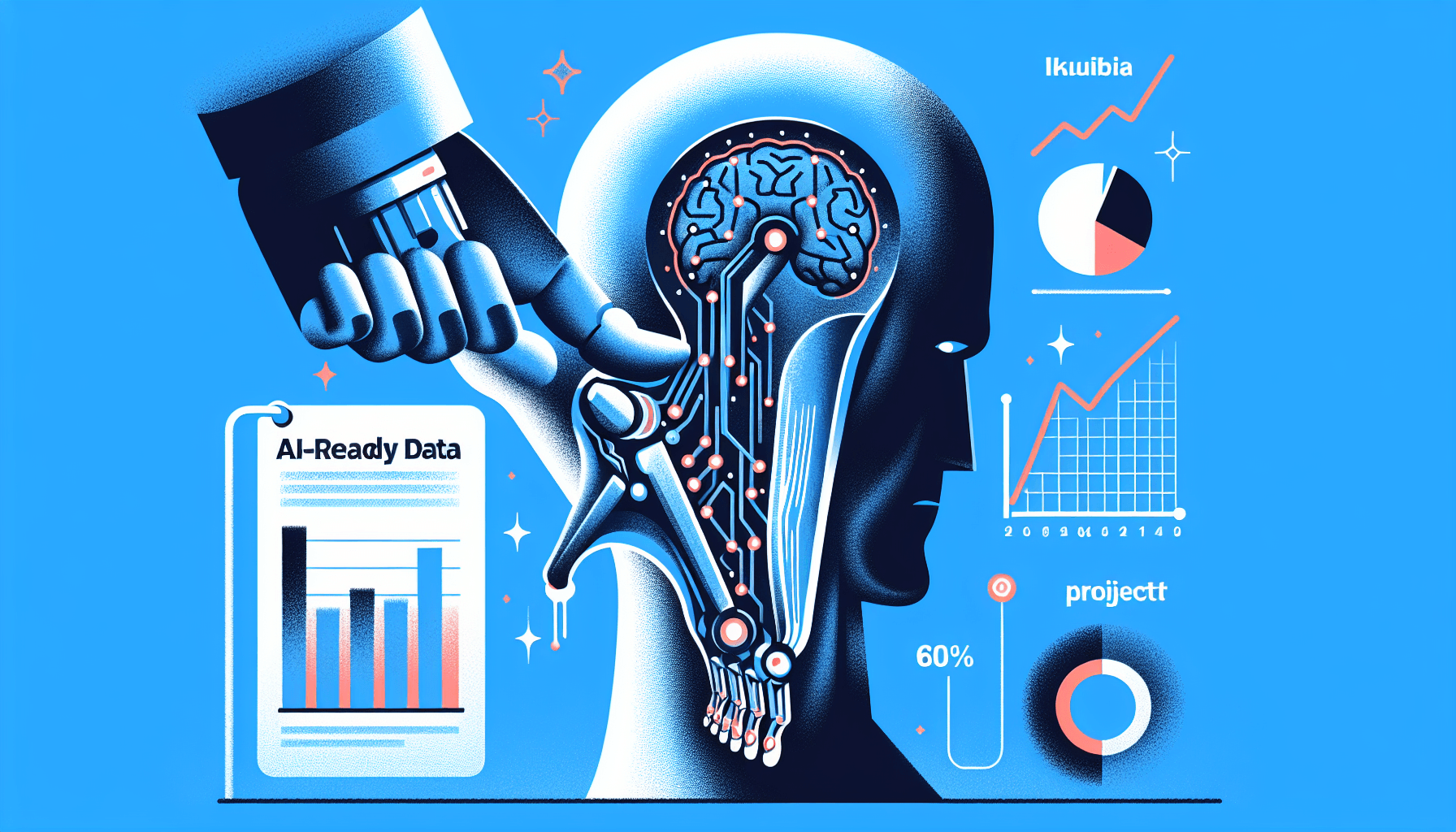
As businesses march towards a future brimming with artificial intelligence (AI), a significant stumbling block casts a shadow on their path: the lack of AI-ready data. This is not an obscure, technical footnotes matter; it’s a clarion call to action for organizations, a cautionary tale highlighted by Gartner’s recent survey which indicates a disconcerting 63% of organizations might not possess the necessary data management acumen to navigate the AI terrain effectively.
The consequences of this oversight can be dire: 60% of AI projects, as forecasted through 2026, are expected to crash against the rocks of inadequacy due to the data shortfall. While enterprises fantasize about capitalizing on AI’s potential, their current practices might be leaving them unprepared for the demands of such potent technological shifts.
Roxane Edjlali, Gartner’s Senior Director Analyst, shares insights on the upheaval that AI introduces to conventional data practices. Traditional systems are straitjacketed by formality and rigidity, frustrating the agility AI applications demand. To transition into AI-readiness, Edjlali advises an iterative addition of AI-centric data practices that include innovative concepts like vector data stores and retrieval-augmented generation, among others. Coupled with a steadfast commitment to evolving metadata management, data observability, and governance, organizations can start steering towards a future where data not only informs but propels AI efforts.
Edjlali outlines a compliance roadmap delineating measures to assure data’s AI readiness: alignment of data with AI use cases, stringent data governance to avoid ethical and legal pitfalls, dynamic metadata, robust data pipelines, and vigorous data enhancement and assurance. Following these guidelines could be the difference between riding the crest of the AI wave or being swallowed by its undertow.
The governance of AI-ready data takes a village—a cross-domain, collaborative effort that beckons CIOs and CDAOs to establish enterprise governance frameworks to infuse responsible decision-making in AI applications. This starts with an executive layer of accountability and cascades down through the corporate decision-making veins, thus ensuring AI initiatives align with business goals while mitigating risk.
Gartner, the company dispensing this cautionary guidance, is a fortress of business and technology insights, known for its laser-focused advice that serves as the lighthouse for enterprises navigating the foggy waters of modern technology. The broader PIM market, already grappling with integrating varied data sources and workflows, is poised to feel this reverberation acutely. AI could exponentially enhance the potential of PIM systems, but only if fed with data that’s cultivated for AI-readiness. As the AI wave looms large, the ability for PIM systems to adapt to AI’s data demands will play a pivotal role in the persistence and success of their utilization in commerce and beyond.
In reflecting upon these trends, it’s clear that the road to AI maturity is paved with not only intention but the right kind of data discipline. Gartner’s analysis is a harrowing reminder that the time is ripe for organizations to scrutinize their data practices and rebuild, where necessary, to usher in an age where AI not only thrives but delivers on its transformative promises.
For more context and insights, dive into Gartner’s detailed analysis and advisory [here](https://www.gartner.com/en/newsroom/press-releases/2025-02-26-lack-of-ai-ready-data-puts-ai-projects-at-risk).
