
Core
"Secondhand Goods Soar Online, Outshining Retail Giants"
Stephan Spijkers · 2024-11-09 · Updated 2026-09-23 · 2 min read
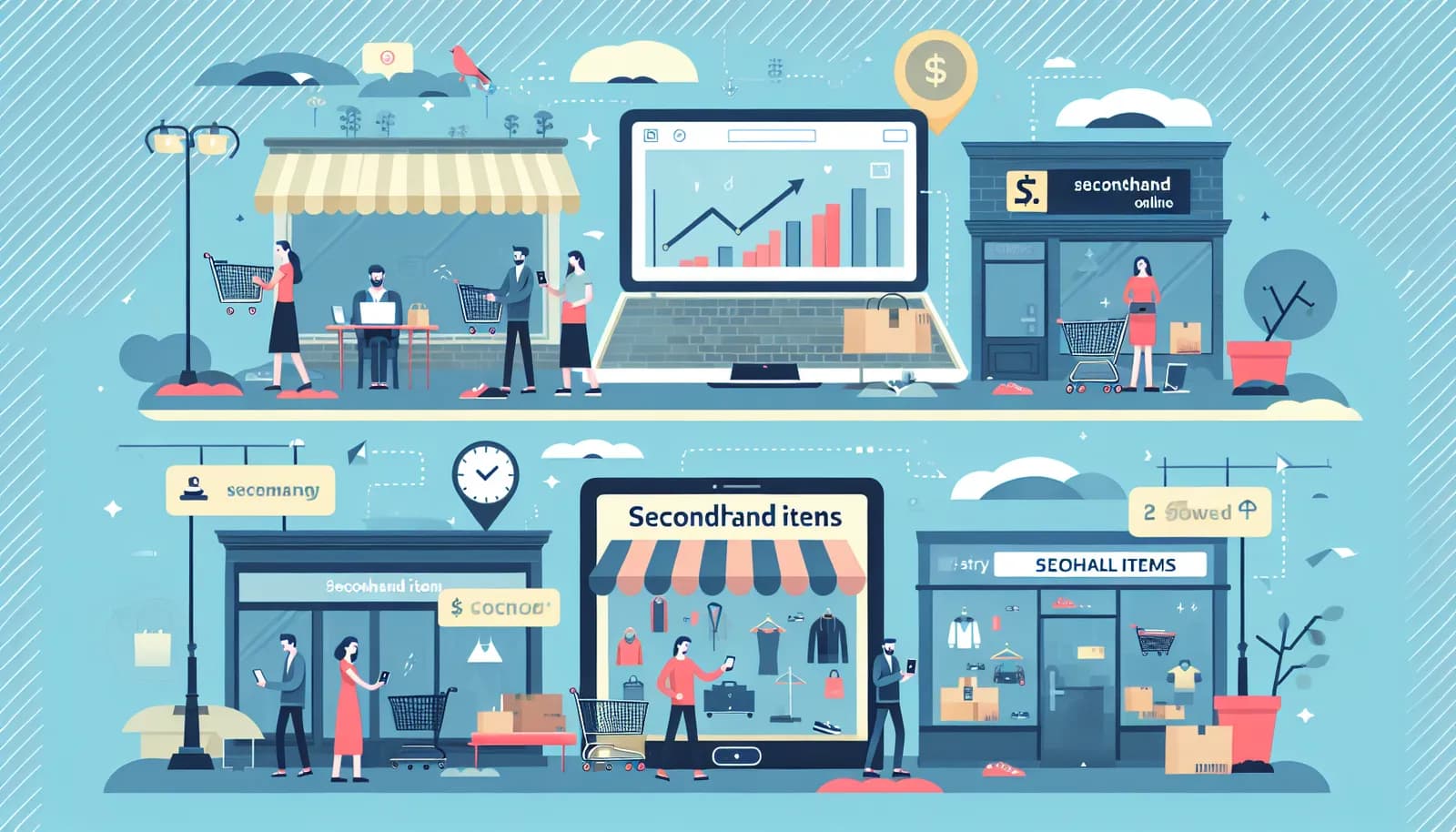
Used goods grew faster than the Top 1000
In 2023, online sellers of used goods grew web sales by 8.0%. The Digital Commerce 360 Top 1000 grew 6.9% over the same period. Demand for pre-owned items is strong, and shoppers are willing to buy them online.
Secondhand sellers are now 7.9% of the Top 1000. The concentration is highest in consumer electronics and hobby goods, and the pattern is not limited to niche shops. Ikea has moved into used goods. H&M, J. Crew, and Kate Spade partner with ThredUp so apparel gets a second sale.
The reasons differ by category. In electronics, trade-in programs fund the upgrade and keep older models at a price people will pay. In hobbies and jewelry, collectors look for vintage or rare pre-owned pieces that can gain value.
Where the model shows up
Web-only retailers are the clearest case: close to 10% of them now sell this way. About 7.1% of consumer brand manufacturers have added used goods to the catalog. The motive is commercial, and it is also a response to shoppers who care about sustainability and ethical consumption. Resale is how those companies show they are cutting waste and environmental impact.
What this asks of a PIM
A used item is not a new SKU with a stable spec. Condition varies, the amount of information varies, and the conversation with the buyer is different. The PIM has to handle that expanded product data: condition, what is known, what is missing.
For a team used to new-product catalogs, the design pressure is transparency, provenance, and quality metrics. As more companies put pre-owned items in the same inventory, those fields stop being optional.
Source: Digital Commerce 360
Diagnostic
Do you actually need a PIM?
Run the complexity index before you budget software or hire an SI.
Budget
Model a first-pass TCO
Translate catalog shape into a three-year cost range in under ten minutes.