
Core
What Does DAM Stand For? Digital Asset Management Explained
Stephan Spijkers · 2025-06-12 · Updated 2026-10-14 · 6 min read
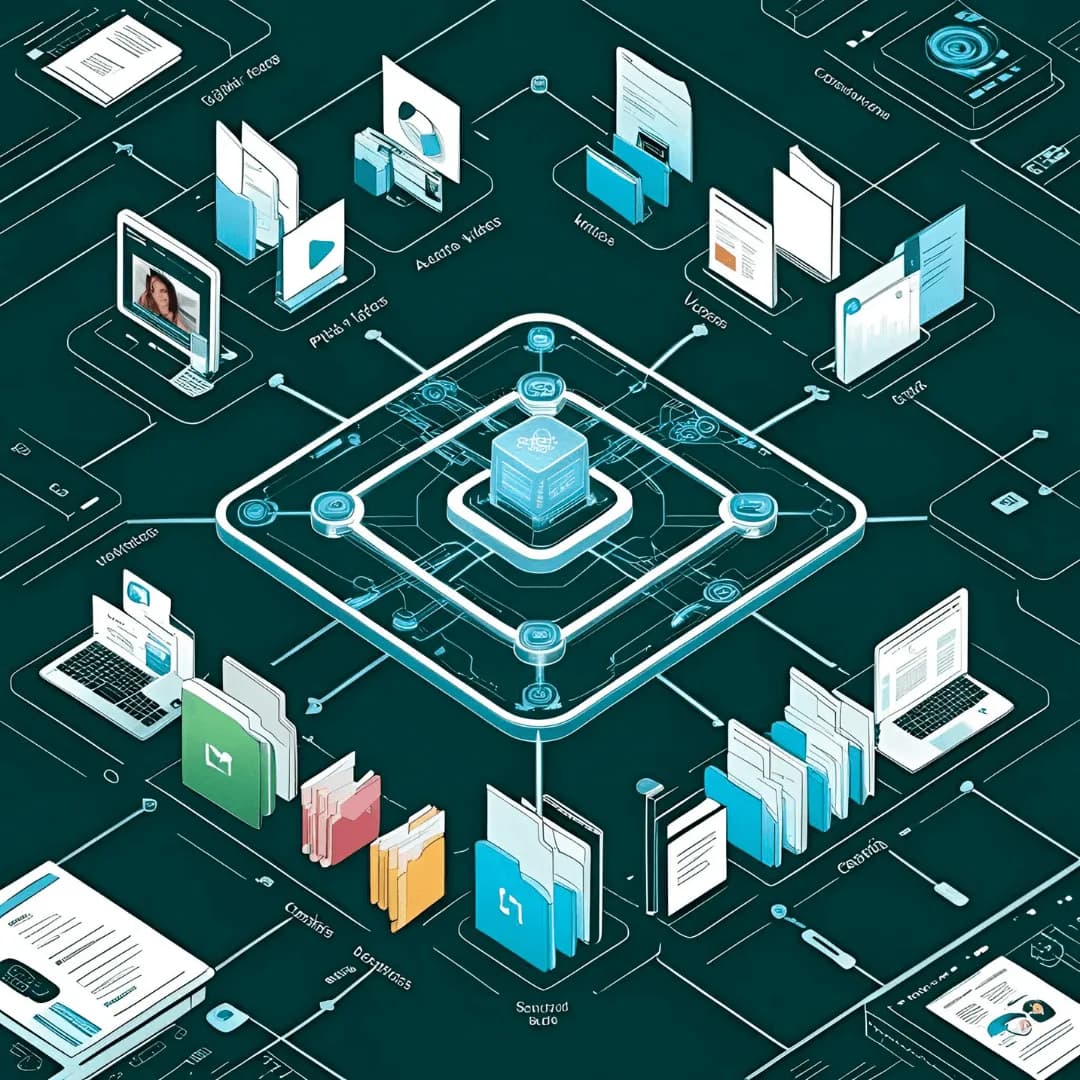
DAM stands for digital asset management: a central system that stores your images, videos, documents and audio, describes each file with metadata, and controls who may use which version. The acronym is simple. The decision behind it is less so, because a DAM only pays off when someone owns the metadata. Buy one without that owner and you get a more expensive shared drive.
This guide explains what a DAM does, how it works day to day, how it relates to a PIM, and what to check before you choose one.
What a DAM actually does
A shared drive stores files. A DAM stores files plus the facts about them: who created the asset, when, which product or campaign it belongs to, where it may be used and until when. That last part, usage rights, is what most teams underestimate. A product photo licensed for the webshop but not for print is a legal risk the moment it ends up in a catalogue.
Day to day, a DAM covers five jobs:
- Ingestion. Files are uploaded and get their metadata at the door: creator, date, rights, product codes.
- Tagging and categorisation. Tags and a fixed taxonomy make assets findable by the words your teams actually search with, such as "product launch" or a product family name.
- Permissions. Roles decide who can view, download, edit or approve. Unreleased campaign material stays with the people working on it.
- Version control. Teams always pull the approved version, and earlier versions stay available when you need to roll back. This is what ends the outdated logo in the sales deck.
- Usage reporting. Many systems track which assets are downloaded and where they are used, which tells you what to retire and what to reshoot.
Types of DAM
Vendors package DAM in a few ways. The labels overlap, so treat them as a starting point:
- Enterprise DAM. Large libraries, complex approval workflows, detailed permissions and customisable metadata.
- Marketing DAM. Built around campaigns, social content and brand material, with collaboration and review tools.
- Creative DAM. Aimed at designers and photographers, with high-resolution files, design formats and visual search.
- Cloud or on-premise. Most new DAM projects are cloud-based and priced by subscription. On-premise still exists for organisations that want full control over where files sit, at the cost of more maintenance.
A short history
In the early 1990s companies started digitising content, and assets lived on hard drives and file servers with no structure beyond folder names. Broadband in the late 1990s and early 2000s multiplied the volume of digital content, and DAM systems added metadata management, friendlier interfaces and integrations with content management and marketing tools. The last decade moved DAM to the cloud, which made it reachable from anywhere and cheaper to scale. The current step is AI that tags assets automatically based on image recognition. That saves time, but the tags are only as good as the taxonomy you give the AI to work with.
Where DAM meets PIM
For product companies, the most important question is how the DAM relates to the PIM. A PIM holds product information: attributes, descriptions, translations and channel-specific versions. A DAM holds the files that illustrate those products. The webshop needs both, joined on the product.
Our article on what DAM and PIM systems are explains where one stops and the other starts, and when a PIM with built-in asset handling is enough. If you are still getting to grips with the PIM side, start with what a PIM system is, which covers the product data that your assets will be linked to.
My rule of thumb: if most of your assets are product images and spec sheets, start with the asset features in your PIM and add a separate DAM only when brand and campaign material outgrows them. If your marketing team produces large volumes of video and campaign content that is not tied to a SKU, you need a real DAM, and the integration between the two becomes the project.
Where a DAM earns its keep
- Marketing campaigns. All campaign material sits in one place, everyone uses the approved version, and reviewers get a link instead of an attachment.
- E-commerce. High-resolution product images carry metadata that keeps them linked to the right product on every listing. User-generated content can be stored and approved alongside your own photography, and variants for A/B tests stay findable.
- Creative production. Version history works as a safety net, and large files go to agencies and clients as links rather than email attachments.
- Training and onboarding. Videos, guides and brand guidelines live in one library, and staff are notified when a document they rely on changes.
How to implement one
- Set a goal first. Decide whether the main aim is faster campaign work, brand consistency or easier retrieval for creative teams. The goal decides which features matter.
- Involve the users early. Interview marketing, sales and design about how they search for files today. Early involvement also builds the support you need at go-live.
- Design the taxonomy before migration. Agree categories and required metadata, including rights and expiry dates, before you move a single file. Migrating the mess first means cleaning it twice.
- Train with real assets. Short guides and hands-on sessions with your own files work better than a vendor demo library.
- Review usage after go-live. Check the analytics and ask users what does not work. A DAM's needs change as the content mix changes.
How to choose a DAM
Start with your requirements: which asset types you manage, who uses the system and which workflows you want to change. Then compare vendors on a short list of essentials: an interface non-specialists can use, search and filtering, metadata management, role-based permissions and usage analytics.
Integration matters as much as features. The DAM has to exchange assets with your CMS, marketing automation and PIM without manual uploads, or teams will go back to downloading and re-uploading files. Look at total cost of ownership, not just the licence: updates, maintenance, training and migration all count. Our comparison of PIM costs gives realistic price ranges for the PIM side, which helps you judge whether a combined suite or two separate systems fits your budget.
Finally, test with a trial or demo on your own assets, with users from several departments. Ask the vendor to show how existing files and their metadata are migrated. That step is where most DAM projects lose their first months.
Diagnostic
Do you actually need a PIM?
Run the complexity index before you budget software or hire an SI.
Budget
Model a first-pass TCO
Translate catalog shape into a three-year cost range in under ten minutes.