
Core
What AI Inside a PIM Actually Does - and Where It Breaks
Nathalie · 2026-04-17 · Updated 2026-10-10 · 14 min read
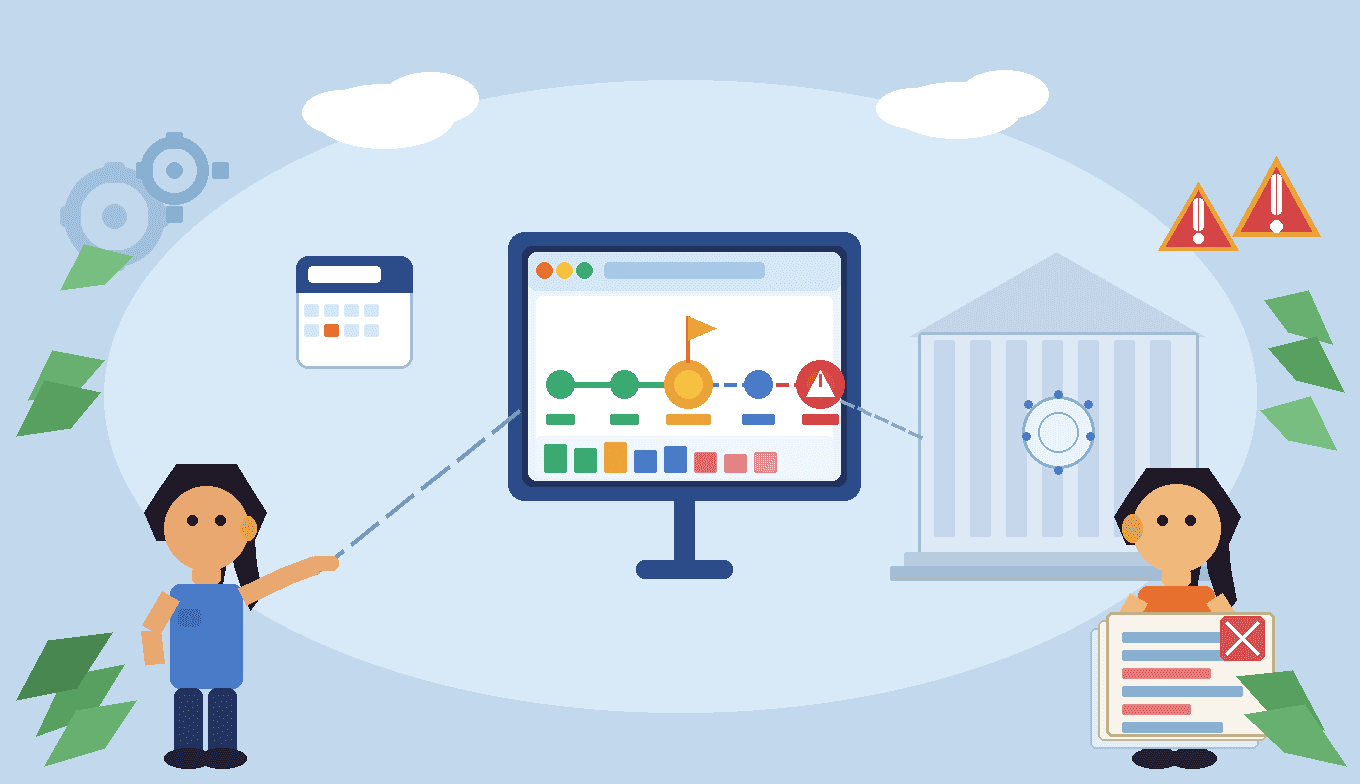
AI inside a PIM is useful on a short list of jobs, and it breaks in predictable places. This guide covers both. It then sets out a staged rollout, the governance that has to run alongside it, and the EU Digital Product Passport, which forces the same data work on a legal timeline. It is part of a series on AI and product information management: part 1, The product data problem no one is fixing fast enough, covers why the product data status quo is eroding competitiveness.
What AI does inside a PIM
Natural language processing, machine learning and computer vision are the pieces that actually touch the catalog. Generative AI, the large language models behind tools such as ChatGPT, adds drafting. Each job still needs a person who knows which rule the model applies, because the model does not know your attribute rules until you teach it.
Supplier onboarding: generative AI on supplier files
Supplier files arrive inconsistent: different formats, different names, missing fields, values that cannot be true. Once a model has been taught your standards, it can take on parts of that work.
- Put files in one shape. The model learns the formats and terms a supplier uses, then maps incoming rows onto the format your PIM already accepts. That includes product names, SKU patterns and the category tree.
- Pull attributes out of raw text. Descriptions, customer feedback and technical specifications often arrive as unstructured text. The model extracts the attributes you need and places them on your data model, so enrichment can start.
- Fill a gap from context. If color is empty but the description names it, the model can write the attribute. A fashion retailer receiving many supplier feeds can fill missing material composition or care instructions from patterns already in the data.
- Check values and catch errors. Attributes can be compared with sources you trust. The same pass flags missing values, impossible ones (a weight of -10 kg) and spelling mistakes. A hit is either corrected or sent to a person.
Data quality checks
Machine learning can be trained on past records and on corrections people already made. It then flags anomalies, inconsistencies and mistakes, and suggests a cleansing or standardization step. It can also check a record as it comes in, against rules you set: incomplete attributes, missing or wrong numbers, items that miss a regulation. Run that check before publication and a bad value is less likely to fan out across channels.
Classification and taxonomy
A model can classify products from their attributes and from earlier classifications. A technology retailer can separate "High-end Gaming Laptops" from "Budget Laptops" on processor, RAM and graphics card, and keep that split as the range changes. On taxonomy, AI can propose a hierarchy and the links between categories from attributes and semantic similarity. The point is findability: a shopper reaches the product with fewer wrong turns.
Channel mapping
A model can learn the structure and the attributes a marketplace or channel requires, then propose the map from your attributes to those requirements. It can learn that Color maps to Product Color on Amazon and to Variant Color on Shopify. You maintain fewer hand-built maps per channel.
Descriptions, enrichment and translation
Drafting copy from attributes is faster than writing each SKU by hand, and the tone stays closer to one standard. Marketing time moves to the work the model should not own. An appliance retailer with a large intake can generate descriptions that cover energy efficiency, how the product is used, and the features that set it apart. Given a list of laptop specifications, a model can write what they mean for a buyer who is not technical. For a new line of monitors, it can turn screen size, resolution, refresh rate and connectivity into a structured first draft that someone then reviews. AI translation for the language pairs with the most traffic follows the same pattern.
Tags and product questions in the shop
A model reads descriptions and attributes and suggests tags for on-site search. For a "red, vintage, wooden chair" it suggests vintage, wooden, red and chair. It can also answer common product questions from the attributes ("Does this phone have wireless charging?"), which leaves support capacity for the harder ones.
Around the PIM
Some AI uses depend on product data without living in the PIM: demand estimates from past sales and market trends, recommendations from preferences and purchase history, image recognition that reads color, pattern, form and texture for visual search, and semantic search that works from context and intent. Each needs the enriched record to reach marketing automation, the CMS and the commerce platform. A generated recommendation is still generated text, and the product data underneath it still has to be right.
Where AI in a PIM breaks
The failure points repeat across these jobs:
- The model does not know your rules. Without your attribute definitions and content standards, you get generic output. Supplier cleansing, classification, descriptions and recommendations are separate switches, and each needs its own rules.
- Training sets carry their own mess. Classification is only as consistent as the examples the model learned from.
- Outside material is unverified. Photos, user-generated content and related products found outside the PIM have to be checked against the record you trust before they reach a product page.
- Handoffs introduce errors. When output is copied by hand between a chat tool and the PIM, inconsistent copies and mismatches creep in.
- Fluent text can sit on wrong data. Generated copy built on a wrong attribute is still wrong.
- Quality drifts. Output that was good at configuration does not stay good without sampling and review.
- Compliance is a different job. An AI-powered PIM is not automatically ready for a Digital Product Passport, which needs verified supplier and lifecycle data with audit trails.
Start with extraction, enrichment and quality checks. Classification, taxonomy and rule-based validation sit on top of those. The catalog improves where someone still owns the rule. Why a model cannot clean data it has no rules for is covered in Cleaning data: why AI isn't a magic fix.
Relay, bridge, highway: where the model sits
ChatGPT and open-source models are easy to try. Turning that into a product data workflow is harder. Three positions describe how AI fits the path from ERP to PIM to the shop.
Relay. Generative tools sit outside the systems that store and publish product data. Product data starts in the ERP: inventory, price, SKU. A person moves it into a generative tool to draft descriptions, then moves the text into the PIM, which publishes to the shop and other channels. You get the model without changing the process. You also get the failure mode of handoffs: inconsistent copies, and time lost to switching systems even though the sentences themselves were generated. The gain is a faster first draft, with a person still responsible for what lands in the record.
Bridge. The generative features move into the systems you already run. The ERP can categorize products and clean inconsistencies in master data with a built-in model. The PIM can draft descriptions and build sets. Enriched data goes to the shop and other channels without a paste step. Fewer hand-made mistakes, and the process looks the same every time.
Highway. The systems are built with the model in the flow, not beside it. The ERP feeds the PIM. The model there drafts descriptions, categorizes, and predicts pricing and sales performance, and it keeps learning from feedback, from how people use it, and from new data.
The practical test is whether enrichment, mapping and publishing still depend on a person moving text between screens. If they do, you are in relay.
How to roll out AI in a PIM: four stages
The most common mistake is to start with technology selection instead of a data audit. The four stages below put the work in an order where each stage produces the evidence for the next.
Months 1 to 3
Foundation: audit the data, set the standards
Before you evaluate any AI capability, establish the current state of the catalog: completeness by product category, average enrichment time per SKU, defects by attribute type, the main data sources and how reliable they are, and the number of records in each language. That baseline shows where AI will help most, gives you a way to measure return, and surfaces the quality problems that would undermine any AI you deploy.
At the same time, write the standards down: attribute requirements per channel, category hierarchy rules, terminology and brand voice. They cannot stay vague when you configure AI, because their precision decides how consistent the output is. Time spent on them before any AI configuration saves remediation later.
Months 3 to 6
Targeted activation: the cleanest slice first
Apply AI to the cleanest, highest-priority part of the catalog first, typically the SKUs that carry most of the revenue. The quality work is justified there, and the results are easiest to read commercially. Three use cases, in this order: generated descriptions for high-volume standard products, where manual effort is highest and the output simplest; gap detection and completeness scoring across the whole catalog; and AI translation for the language pairs with the most traffic.
Measure everything against the baseline from stage 1. The goal is not maximum deployment. It is validated results that justify the next stage.
Months 6 to 12
Scaled deployment: the whole catalog, with governance
Extend the AI workflows to the full catalog, with the standards and governance from the earlier stages. Workflow automation pays off most here: task routing, automatic approval triggers for records that meet quality thresholds, and AI-assisted import mapping for supplier feeds. Keeping AI-assisted content work inside the system that already manages and publishes product information means reviews and approvals happen before content goes out.
Add AI on the asset side as well: image tagging, quality checks against channel requirements, and tracking of usage rights, so a supplier image needs less handling before it is ready to publish.
If you have Digital Product Passport obligations, this is the stage to build the DPP attributes and processes into the PIM data model: lifecycle data fields, supplier data validation and audit trails. Build them in now rather than retrofit them later as a parallel compliance project.
Months 12 to 24
Predictive intelligence: link quality to results
Connect catalog quality to commercial outcomes: conversion, returns, search performance and channel rejections. Those feedback loops let content models improve, and once you can show that better product data lifts conversion, funding decisions get easier. The PIM becomes a source of commercial insight, not only a data management function.
Worth piloting at this stage: conversational interfaces, where people onboard products in natural language instead of filling in forms, which shortens training for new users; and autonomous enrichment, where the system gathers attribute data from outside sources such as manufacturer specifications, regulatory databases and standards bodies, and pre-fills records for human review.
Governance across every stage
Every stage of the rollout needs governance, and most organizations underinvest in it. Three elements are non-negotiable.
- Content governance before content generation at scale. Explicit brand voice guidelines, training sets curated from your best-performing content, review thresholds per product category and commercial importance, and sampling that checks AI output continuously instead of assuming it stays good after configuration. Apply extra scrutiny to content tied to trusted brand names, where buyers expect accuracy. Keep people on evaluative and creative work, where the perception of automation affects credibility.
- Data lineage and audit trails in the architecture. Know which model generated which record, when, from which input, and who reviewed it before publication. DPP compliance makes this mandatory for regulated product categories. It is good practice everywhere, because it lets you trace and fix quality problems systematically instead of one complaint at a time.
- Supplier data coordination, early. AI performance and DPP compliance both depend on clean, structured supplier data. Set clear requirements for material origins, component details and sustainability data. The most common cause of delay is an AI system that cannot perform because the upstream data is inconsistent, incomplete or arrives in formats that need manual work.
The roles and rules behind this are covered in product information governance.
Digital Product Passports: the same data work
Most PIM conversations are about efficiency and conversion. The EU Digital Product Passport (DPP) deserves the same attention, because it forces investment in product data on a legal timeline, whether or not the commercial case has been made internally.
A DPP is a machine-readable record per product, reached through a data carrier such as a QR code, NFC or RFID. It covers material composition, origin, environmental impact, recycled content, repairability and end-of-life instructions. It is not a marketing document. It is a data infrastructure requirement. Batteries are the first product group with a mandatory passport, from February 2027 under the EU Battery Regulation. Other product groups, textiles and furniture among them, follow in phases through product rules under the Ecodesign for Sustainable Products Regulation (ESPR). The obligations follow the product, so they also apply to manufacturers outside the EU that sell into it.
Most manufacturers today rely on scattered supplier documents, ad-hoc lifecycle assessments, manual processes and static product reports. A DPP needs data flows most PIM implementations were not designed for: verified material origins, component-level sustainability data, lifecycle data from suppliers, and version-controlled audit trails. That is why an AI-powered PIM is not automatically DPP-ready.
The two investments are largely the same investment. AI and DPP compliance both need clean, structured, centralized product data, governance and supplier coordination. One roadmap that serves both gets more from the same infrastructure spend than two separate programs. The passport itself is covered in Digital Product Passport, and its overlap with packaging rules in PPWR and the Digital Product Passport.
What the organizations that get this right do
The companies getting commercial returns from AI in their PIM share a recognizable profile:
- They treat product data as a revenue asset, not a cost center.
- They measure the catalog before they deploy AI.
- They sequence: data foundation first, targeted activation second, scaled deployment third, predictive intelligence fourth.
- They build governance before content generation goes live at scale.
- They coordinate supplier data requirements early and explicitly.
- They run DPP compliance and AI on one data foundation, not as separate initiatives with separate budgets.
AI does not fix a catalog nobody owns. If you are still deciding whether a PIM is the right foundation, start with what a PIM is and how to select the right PIM.
Where to go from here
Frequently asked questions
What does AI inside a PIM actually do?
Inside PIM, AI is used to auto-tag attributes, detect anomalies, classify unstructured product data, generate standard descriptions, score completeness, translate, route tasks, and later connect catalog quality to commercial outcomes. It does not replace a clean data foundation.
What can generative AI do in a PIM?
It can map supplier files to your format, extract attributes from raw text, fill gaps from context, classify products, map attributes to channel requirements, and draft descriptions. It needs your attribute definitions and content standards first, not a generic prompt.
Where does AI in a PIM break?
Where the model does not know your attribute rules, where its training examples are inconsistent, where outside material goes unchecked, where output is copied by hand between tools, where fluent text sits on a wrong attribute, and where nobody samples the output after go-live.
What are the relay, bridge, and highway phases of AI in PIM?
In relay, generative tools sit beside ERP, PIM, and the shop, and a person copies the output between them. In bridge, the AI features run inside the systems you already use. In highway, the systems are designed with the model in the flow, so enrichment, mapping, and publishing no longer depend on copying text between screens.
Where should an organization start with AI in PIM?
Start with a data audit and explicit taxonomy standards, then activate AI on the cleanest, highest-revenue catalog slice. Beginning with vendor technology before measuring completeness, defects, and sources is the most common failure.
Why does AI in PIM break without governance?
Content generation at scale needs brand guidelines, review thresholds, sampling, data lineage, and supplier coordination. Without those, AI outputs drift, audit trails are missing, and upstream supplier data stays too inconsistent to automate.
Why isn't an AI-powered PIM automatically ready for Digital Product Passports?
A DPP is a machine-readable regulatory record, not a marketing document. It needs verified materials, origin, sustainability metrics, and end-of-life data with audit trails. Most PIM implementations were not designed for those supplier and lifecycle flows.
Should DPP compliance and AI PIM be separate programs?
No. Both need clean, structured, centralized product data, governance, and supplier coordination. Building one roadmap for both gets more return from the same infrastructure spend than running them as separate workstreams.
Diagnostic
Do you actually need a PIM?
Run the complexity index before you budget software or hire an SI.
Budget
Model a first-pass TCO
Translate catalog shape into a three-year cost range in under ten minutes.