
Core
What are up-sell and cross-sell?
Sophia Mokrytska · 2022-12-21 · Updated 2026-09-23 · 3 min read

Up-sell and cross-sell both raise order value. They are not the same move. An up-sell replaces the item the buyer was about to take with a better or more expensive version. A cross-sell adds a second product that belongs with the first. Both only work when the catalog knows how products relate.
What is upselling?
Up-selling is offering an improved or more expensive version of the product the customer is already buying. They came for the basic model. You show what the higher model does that the basic one does not.
A theater is a clean example. Someone walks up for a standard seat. The box office can offer a roomier seat in a better section. If the buyer switches tickets, the order value goes up and they still leave with one ticket, not an extra product.
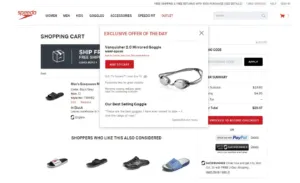
The original ticket is still the purchase. The upgrade is a different version of that same ticket, and both the theater and the buyer get a higher order value from it.
What is cross-selling?
Cross-selling adds products that go with the one already in the basket. A successful cross-sell means the buyer takes the original item plus one or more others.
Same theater. At the ticket window they offer a reusable cup and a popcorn pail. If the buyer takes those with the tickets, that is a cross-sell. The tickets stay as they were. The buyer leaves with more goods: a film, popcorn, and a drink.
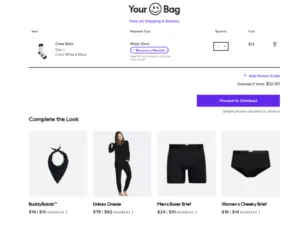
Why the offer has to fit
Online, people expect the right product in a few clicks. An up-sell or cross-sell that ignores what they searched for, or what sits in the basket, is noise. The offer has to come from the catalog: shared use, a better variant, or a product that completes the one they already chose. That is what shortens browsing and lifts the order.
How PIM enables cross-selling
Retailers and marketplaces can sell sets of related products when those relations live in the product data. Items are grouped on shared characteristics, which is what makes a cross-sell or an up-sell possible to publish.
Breakfast is the usual case. Someone looking at cornflakes may also want milk, a bowl, and yogurt. A PIM holds the rules for when those products are recommended against the item being viewed. The storefront then suggests milk, a bowl, and yogurt because the rule says so, not because someone typed the offer into the page by hand.
What a central PIM changes
A central PIM supports the buying process, more sales, higher customer satisfaction, a broader and deeper range, and simpler internal work. Those only show up if the product content is accurate, consistent, and easy to reach. The relations used for up-sell and cross-sell are part of that content. If the link between cornflakes and milk is missing or wrong, the offer on the page will be too.
Diagnostic
Do you actually need a PIM?
Run the complexity index before you budget software or hire an SI.
Budget
Model a first-pass TCO
Translate catalog shape into a three-year cost range in under ten minutes.