
Signal
Crystallize Builds a B2B Store in 60 Minutes. The Catalog Model Takes Longer.
Stephan Spijkers · 2026-10-30 · 3 min read
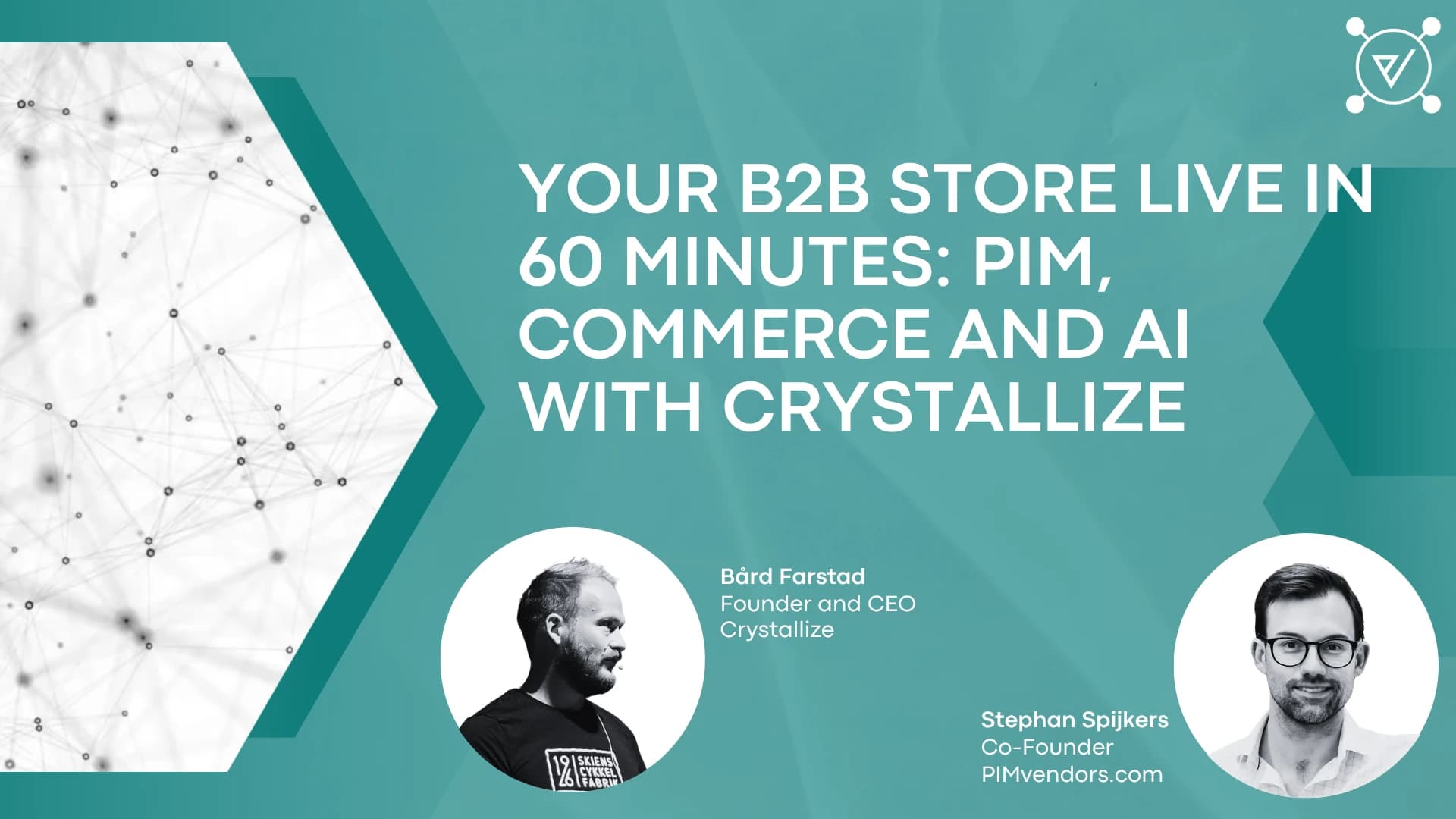
Bård Farstad from Crystallize and Stephan Spijkers configured and published a B2B store within a 60-minute session. They built it on one headless platform for product data and commerce, covering the catalog model, customer-specific pricing and the storefront. The hour runs on a prepared catalog. A production launch still adds the product data model, the pricing rules and the supplier data behind them, and those decisions take weeks.
Bård Farstad, founder and CEO of Crystallize, built the store with Stephan Spijkers, co-founder of PIMvendors.com. Farstad's profile is where you follow the person who leads the platform. Stephan's profile is where you follow the PIMvendors side of the work.
Product shapes in Crystallize hold a B2B catalog as variants, specifications and documents, without one rigid SKU schema for everything. Customer-specific prices, price lists and account structures sit in the same platform as the product data. The storefront is a headless frontend on that same API, so the store and the catalog ship together.
One platform for product data and commerce removes the integration project between PIM and shop, which is where many B2B launches lose months. Modeling stays. Product shapes, attribute lists and price rules still need someone who knows the catalog, and a fast build on a weak model ships the weak model sooner.
Read the product data model when you are setting variants, attributes and SKUs. That is the catalog work this hour starts from, and it is the part that takes weeks. Follow the product data process when you plan the weeks around the build. It puts onboarding before enrichment and publication, the sequence every launch follows, however fast the build. The Product Data Modeller drafts that model before kickoff. Use it when the model should be written down before the 60 minutes start.
Headless, composable and MACH shows where a separate storefront usually sits next to the PIM. Open it for that split. This session removes it by running the shop on the same API. AI-ready product data is the bar for the record once the store is live and assistants start reading it. Open it when the catalog has to meet that bar after go-live.
Takeaways
A 60-minute build works on a prepared catalog. The product data model and the price rules set the production timeline. Running PIM and commerce on one headless platform removes the integration project between them.
B2B pricing belongs in scope from week one. Adding customer-specific prices after launch reopens the data model. Name a catalog owner before go-live, or the speed gained in the build is lost in maintenance.
Diagnostic
Do you actually need a PIM?
Run the complexity index before you budget software or hire an SI.
Budget
Model a first-pass TCO
Translate catalog shape into a three-year cost range in under ten minutes.