
Signal
Single Source Ep. 3: The Marketplace Follows the Product Record
Nathalie · 2026-03-23 · Updated 2026-10-17 · 3 min read
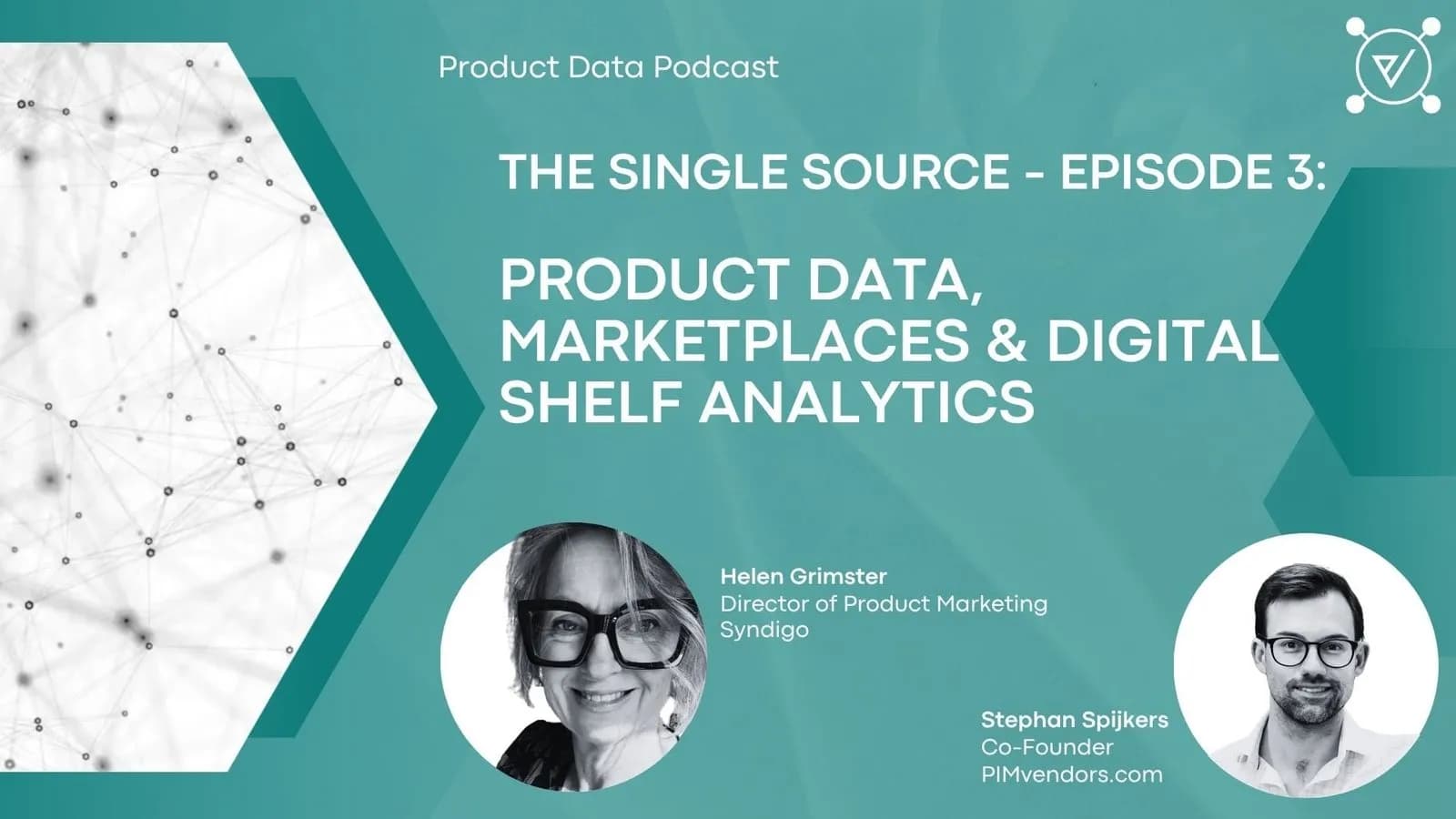
A marketplace does not reward a thin product record, and digital shelf analytics mostly tells you that after the listing is already losing. That is the takeaway from Single Source episode 3, with Helen Grimster of Syndigo and Stephan Spijkers.
The conversation covers product data quality, what breaks when you sell on marketplaces, and where a PIM sits in that mess. It then connects shelf analytics to revenue, and spends time on reviews and other shopper content, on AI in product content, and on agentic commerce and chat-based shopping. The balance between a site, a marketplace and a physical shelf comes up as the same record wearing three outfits.
Speakers
- Stephan Spijkers, co-founder, PIMvendors.com
- Helen Grimster, Director of Product Marketing, Syndigo
What to keep from the episode
- The record comes first. Quality here means the attributes a channel will accept and a buyer will compare: title, identifiers, size, material, images, the claim you can defend. A PIM is the place that work has an owner. Product data quality and governance is the operating version of that sentence.
- Each marketplace wants its own cut of the content. One master description pasted everywhere is how you fail a template you have never read. PIM and marketplaces walks through why the feed and the product page diverge, and what has to stay identical anyway.
- Shelf analytics is how you choose the next fix. It ties the listing you published to the revenue you did or did not get. Without it, the team argues from opinions. With it, you still need someone who can change the attribute, not only the dashboard.
- Reviews and shopper content move the sale, and they outlive the page. Other buyers trust them. An assistant that shops on a customer's behalf will quote them too. AI-ready product data and agentic commerce is the argument for cleaning the record before that assistant is the one reading it.
- The same facts have to survive a store, a marketplace and a chat. What PXM stands for puts the experience on top of the record. Episode 3's version is blunter: if the facts disagree, the nicer page loses to the page a shopper decides to trust.
The chain the episode uses is product data, then marketplace execution, then analytics, then the next change, then trust. Skip a link and the next one flatters you. Analytics on a bad listing produces a precise chart of a loss. AI copy on a bad record produces a fluent listing that is still wrong.
The trade-off is attention. Tailoring content per marketplace costs editorial time you will want to spend on the hero products only. Do that on purpose. Pick the channels and the attributes that analytics says are losing money, and leave the long tail on a complete, plain record. Completeness beats a clever sentence on a marketplace that rejects the file.
Diagnostic
Do you actually need a PIM?
Run the complexity index before you budget software or hire an SI.
Budget
Model a first-pass TCO
Translate catalog shape into a three-year cost range in under ten minutes.