
Signal
Single Source Ep. 2: AI Needs an Owner on the Product Record
Nathalie · 2026-03-19 · Updated 2026-10-17 · 3 min read
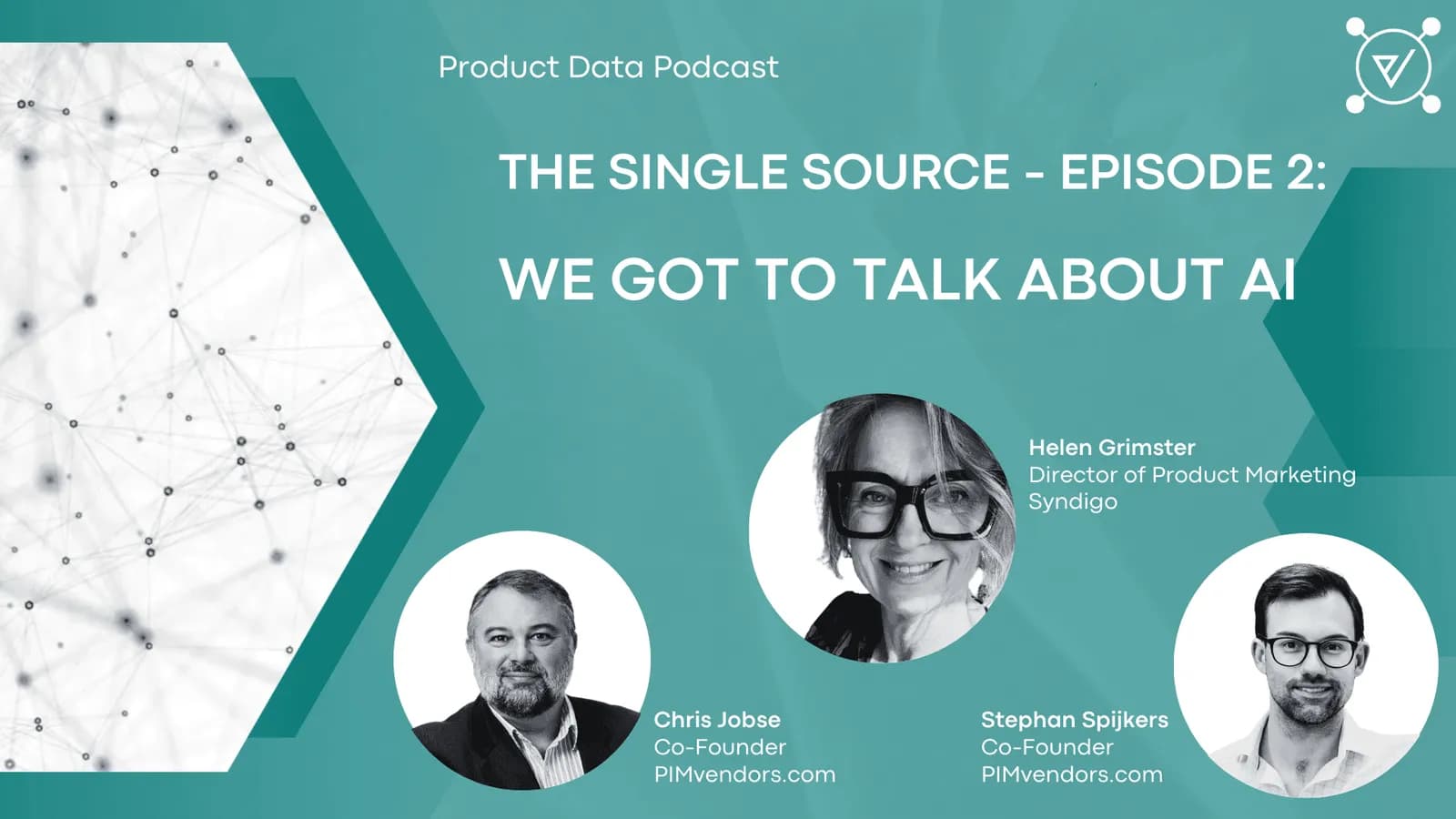
AI was the title of Single Source episode 2. The point the conversation keeps returning to is older: you cannot hand a model a product record that nobody owns. Quality, in this episode, is a definition plus an owner plus a channel rule. A model can speed up whatever you already decided. It does not decide it.
Helen Grimster, Stephan Spijkers and Chris Jobse talk through why product data goes stale, why ownership is usually implied rather than assigned, and why "good" depends on the channel. Compliance shows up as a growing constraint on the same record. So does the temptation to declare the clean-up finished.
Speakers
- Helen Grimster, Director of Product Marketing, Syndigo
- Stephan Spijkers, co-founder, PIMvendors.com
- Chris Jobse, co-founder, PIMvendors.com
What to keep
- Name what "good" means before you fund a clean-up. Different channels want different completeness. A marketplace template and a print catalogue are not the same bar. Product data quality and governance is the working definition: dimensions, roles, and a fix that survives the person who knew the spreadsheet.
- Ownership that lives in a job title nobody holds will not hold. When everybody assumes someone else checks the attribute, nobody does. The episode's remedy is explicit assignment. The PIM implementation guide puts that assignment in the project, next to the model, instead of in a kickoff slide.
- AI amplifies the record you already have. Clean inputs, usable outputs. Dirty inputs, errors with confidence. AI-ready product data is the condition list: attributes that mean one thing, completeness a channel can test, and a path for a person to override the draft.
- Compliance is another definition of complete, written by someone outside the team. If you treat it as a document in a folder, the record will fail the first audit that reads the fields.
- Quality work does not end. Attributes change, suppliers send a new file, a channel adds a required column. Gamification can get a team to clear a backlog once. It does not replace the owner who looks at next month's file.
- Collaboration is the unglamorous half. Marketing, the channel team and whoever receives supplier data have to agree which value wins. A PIM does not referee that argument. It stores the outcome.
The trade-off is speed against a definition. Teams want the model this quarter and the governance "once we see it work." Episode 2's order is the reverse, and it is the order that keeps the first AI feature from teaching every channel your worst attribute. Start with the ten fields a channel rejects and a buyer compares. Assign them. Then let a model draft the rest, with a sample a human still reads.
Diagnostic
Do you actually need a PIM?
Run the complexity index before you budget software or hire an SI.
Budget
Model a first-pass TCO
Translate catalog shape into a three-year cost range in under ten minutes.