
Field
A 130-Year-Old Jeweller Picked a PIM for Its Headless Stack
Nathalie · 2026-03-09 · Updated 2026-10-23 · 3 min read
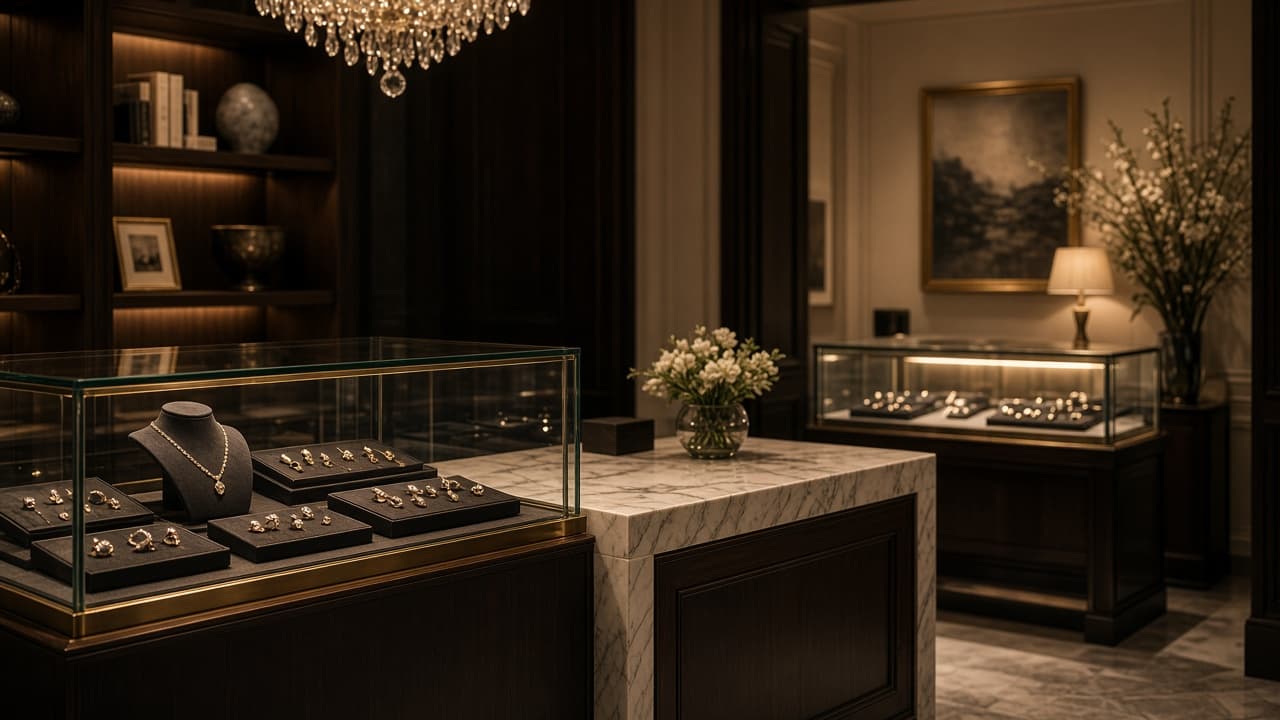
The jeweller picked a PIM that could join the headless stack it already runs. The company has traded for more than 130 years and has over 20 locations across Europe, including boutiques for Rolex, Patek Philippe, Cartier, IWC, Hublot and Vacheron Constantin. Watches, high-end jewellery, diamonds and a growing Pre-Owned programme all sit on that product record. PIMvendors turned the commerce ambition and the IT constraints into one requirements list, kept the shortlist to API-first, cloud-native, composable systems, and ran the demos on the jeweller's own scenarios.
Client Introduction
The commerce platform was already headless and MACH-aligned: composable, API-first, modular at the back. Product information had not kept up. Dozens of luxury brands each bring their own content rules, imagery standards and attribute structures.
A watch needs case diameter, movement type, water resistance and materials. Jewellery adds gemstone data, carat weight and certification. Pre-Owned adds condition grading and provenance on top. A monolithic PIM would have cut against the architecture the company had already paid for.
The Challenge
The PIM had to carry that attribute depth and still fit the headless stack. API-first, cloud-native and composable were the constraints. Business stakeholders needed rich product stories, brand-specific content rules and publishing to more than one channel. IT needed the PIM to behave as one component among the others. One of those lists, used alone, would have produced a PIM the other side would refuse.
The Solution
PIMvendors worked with the business and IT teams until both could stand behind a single requirements set. The shortlist was independent, and it was filtered for platforms that are API-first, cloud-native and able to sit as one component in a composable stack. Anything that asked the jeweller to drop those principles was out before a demo was booked.
Vendors then showed the scenarios that matter here. One was onboarding a new watch brand with 200 SKUs and strict imagery rules. Another was publishing Pre-Owned stock with condition-specific attributes. The comparison stayed on those jobs.
The Results
The jeweller selected a PIM that fits the brand requirements and the composable stack. It connects to the headless commerce setup through APIs. Merchandising can see a path for content across brands and channels. IT can see a system that keeps the MACH principles. The requirements were written down first, so implementation has a brief.
The trade-off is the size of the shortlist. A MACH filter removes PIM platforms that would handle watches perfectly and still force a rewrite of the commerce architecture. For a house with this many brand rules, a longer list of weaker architectural fits is the more expensive option.
The filter is the lesson. Write the attribute jobs and the architecture rules as one list, then let vendors fail a real scenario. The commerce stack is where a PIM sits next to a headless commerce platform, and why the boundary matters before a contract. PIM features and capabilities is the API and content depth those demos were testing, on 200 SKUs with real imagery rules. How to select a PIM is the structured evaluation this shortlist went into. What PIM is is the job the merchandising team and the IT team had to describe in the same sentence.
Diagnostic
Do you actually need a PIM?
Run the complexity index before you budget software or hire an SI.
Budget
Model a first-pass TCO
Translate catalog shape into a three-year cost range in under ten minutes.