
Field
Primera Selected a PIM So Store and Web Share One Record
Nathalie · 2025-10-24 · Updated 2026-10-26 · 3 min read
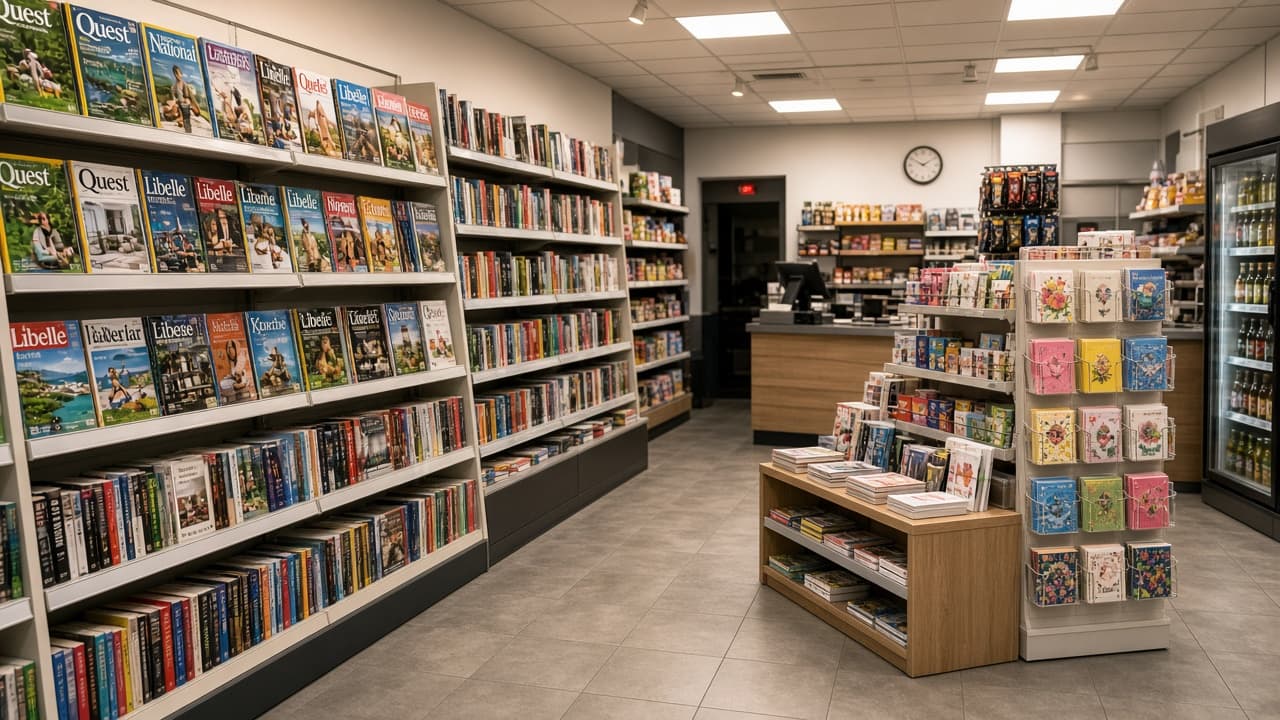

Primera selected a PIM so the store and the web can share one product record. The point of sale already runs the shops. Magento runs the web, and it was not connected to that record. Click-and-collect was the moment that split had to close.
Client
Primera is one of the largest retail chains in the Netherlands, with hundreds of convenience stores selling books, magazines, tobacco, gifts and lottery services. The shops are the core of the business, e-commerce is growing beside them, and the chain serves millions of customers a year.
The challenge
The architecture sits on a point-of-sale system that also functions as the ERP. Supplier products come in through that ERP, which reformats them for the point of sale. Primera adds its own main groups and subgroups on top, because the retail range needs that structure. The web shop is Magento, and Magento was not connected to a central product database. The stores ran on one relatively uniform system. The online channel stood apart, so keeping the same product consistent and up to date across channels was the hard part. Primera had started on click-and-collect, which only works when the item a customer orders online is the item the shop can hand over.
The approach
PIMvendors clarified the requirements with Primera and mapped the product-data architecture: how data moved through the systems, and where consistency and integration broke. Workshops with the people who run the shops and the web defined what the PIM had to deliver. It had to connect to the store systems and to Magento, so both channels read one record.
The result
The PIM is selected, and Primera is moving the catalogue onto it. Store and web are the two channels that record has to serve, which is what click-and-collect needs. Store operations stay on the point of sale. The PIM holds the product content the channels share. That is the cut in manual work between Magento and the point of sale, and the reason the shared record can be trusted.
A chain whose point of sale is also the ERP will not get a web catalogue by extending the point of sale. Where ERP stops and PIM starts is that boundary: orders, stock and finance stay in the ERP, and the product content customers see needs its own system. Magento and a PIM is the web half of Primera's map, a shop that was never fed by a central product database. How to select a PIM is the selection Primera ran from the architecture map. The commerce stack puts the point of sale, the ERP role and Magento on one picture, which is the picture the workshops drew.
Diagnostic
Do you actually need a PIM?
Run the complexity index before you budget software or hire an SI.
Budget
Model a first-pass TCO
Translate catalog shape into a three-year cost range in under ten minutes.