Core
The Single Source Podcast: PIM Selection and Implementation Realities
Nathalie · 2026-06-24 · 4 min read
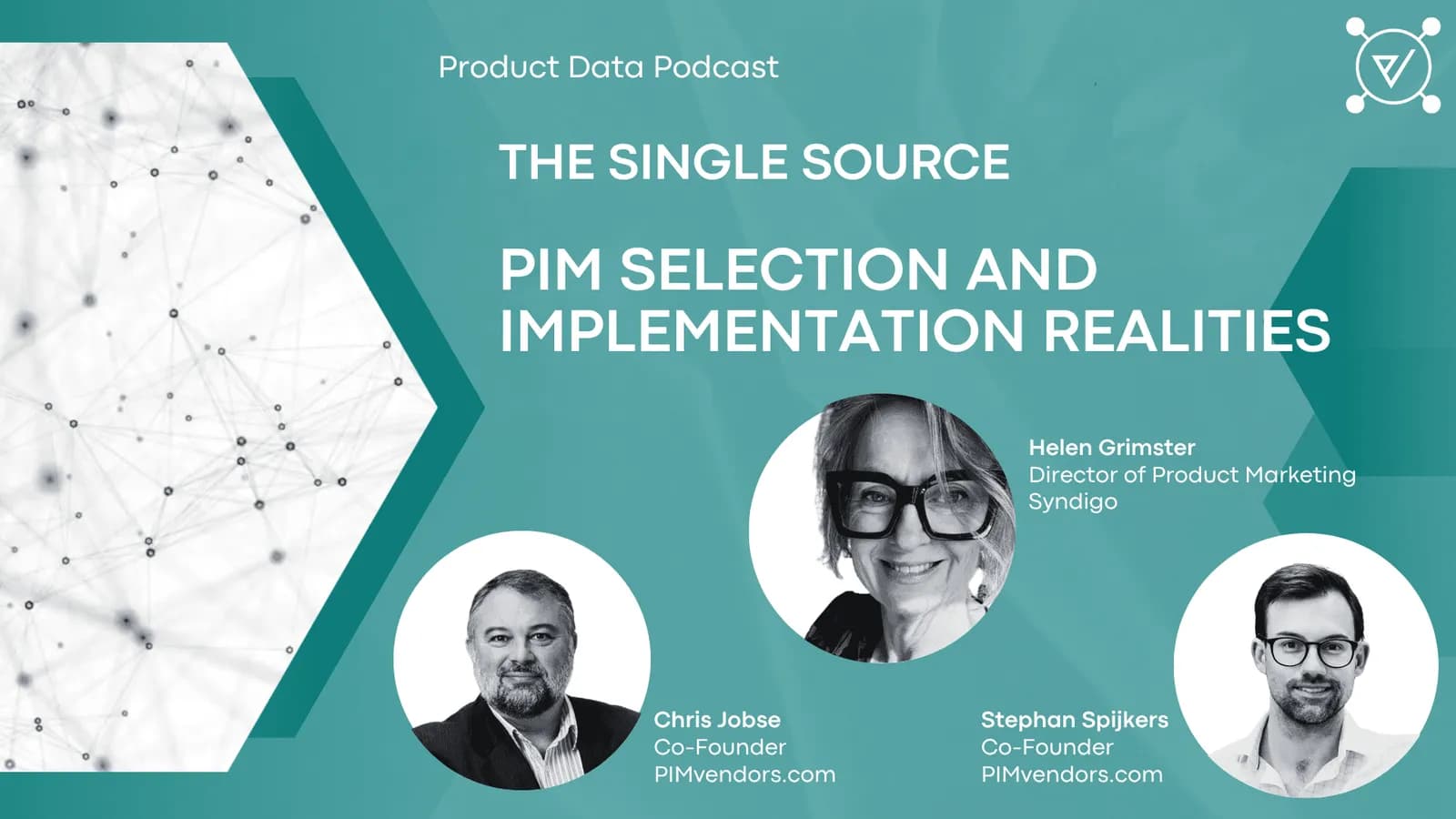
Picking the right PIM matters less than most teams think. What determines whether a PIM selection succeeds is the sequence of decisions made before any contract gets signed: which requirements actually matter, how those requirements get tested against real scenarios, and who in the organization is bought in before rollout. In this session, Stephan Spijkers and Chris Jobse walk through the full PIM selection process, from where AI now fits into evaluation to why a polished demo can hide the wrong fit.
Speakers:
Chris Jobse - Co-Founder, PIMvendors.com
Stephan Spijkers - Co-Founder, PIMvendors.com
Helen Grimster - Director of Product Marketing, Syndigo
https://youtube.com/playlist?list=PLM_CadNoO0O_5sRZEAbwtRz-iTkhm0KpM&si=P115ogUUyz3S2YbU
Where AI Actually Fits in PIM Selection
AI now shows up in nearly every PIM selection conversation, but it changes the evaluation process less than the marketing suggests. AI can speed up data cleansing, classification, and parts of vendor comparison. It does not replace the work of defining what your organization actually needs from a system. Teams that skip straight to AI capabilities before nailing down requirements tend to select on the wrong criteria.
Requirements Come Before Vendor Conversations
A PIM selection that starts with vendor demos instead of internal requirements is already off track. Marketing, IT, and e-commerce teams each carry different priorities, and none of them should be settled informally. Getting requirements right upfront is what makes every later step, from shortlisting to scoring demos, actually comparable across vendors.
Use Cases Make Requirements Testable
A requirements document is only useful once it is translated into use cases a vendor can be run against. Generic checklists produce generic answers from every vendor. Specific use cases, built from your own product data and workflows, are what separate a real evaluation from a feature comparison exercise.
Integration Will Decide How the PIM Ages
The future of PIM is increasingly about how well it connects into the rest of the stack, not which features it ships with today. Integration challenges that get ignored during selection tend to resurface during implementation, when they are far more expensive to fix. Evaluating integration depth before signing is part of evaluating the platform itself.
Scenario-Driven Demos Beat Vendor Pitches
A demo built around the vendor's strongest features tells you little about fit. A demo built around your own scenarios tells you whether the platform holds up under your actual conditions. Scenario-driven demos take more effort to set up, and they are the only version of a demo worth trusting.
Buy-In Has to Reach Beyond IT and Marketing
A PIM selection can clear every technical box and still fail if the rest of the organization was never brought along. Broad buy-in, across the teams that will use the system day to day, is what determines whether adoption happens after go-live. Selection processes that treat buy-in as a final step instead of an ongoing one consistently struggle here.
Evaluating a Demo Means Testing It, Not Watching It
Vanilla, vendor-led presentations are built to flatter the product. Evaluating a demo properly means putting it in front of your own data and your own edge cases, not the vendor's best-case scenario. The gap between what a demo shows and what the system can actually do only becomes visible when you push on it.
The Business Case Has to Hold Up on Its Own
A PIM investment needs a business case anchored in measurable outcomes, not a comparison of feature lists. Building that case forces the same discipline that requirements gathering does: knowing exactly what problem the system needs to solve and how success will be measured.
Implementation Partners Are Part of the Selection, Not an Afterthought
The platform is only half the decision. Who implements it, and how well that partner understands your organization's specific requirements and use cases, shapes the outcome just as much as the software itself. Evaluating implementation partners deserves the same rigor as evaluating the PIM.
What Happens After the Vendor Is Chosen
Selecting a vendor is not the end of the process. The decisions that follow, around implementation sequencing, internal ownership, and rollout pacing, determine whether the project delivers on the case that justified it in the first place.
👉 Planning a PIM selection process of your own? Get independent guidance on requirements, vendor shortlists, and demos at pimvendors.com.
Diagnostic
Do you actually need a PIM?
Run the complexity index before you budget software or hire an SI.
Budget
Model a first-pass TCO
Translate catalog shape into a three-year cost range in under ten minutes.