
Signal
The Single Source EP.13: Digital Product Passport, Data Management and Supplier Collaboration
Stephan Spijkers · 2026-10-04 · 4 min read
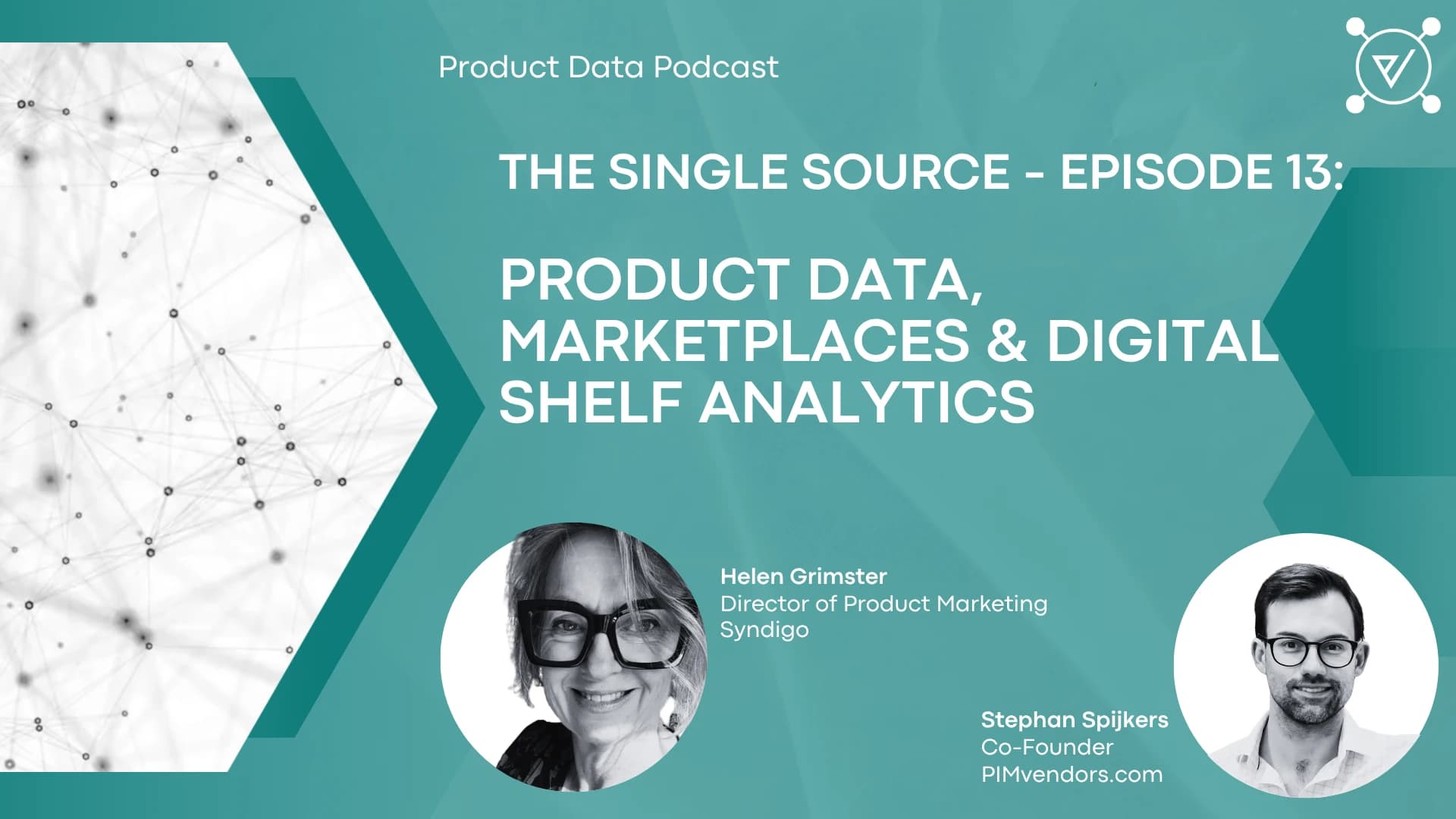
The Digital Product Passport is a product data problem before it is a compliance problem. Teams that treat it as a chance to clean up their data and open up their supply chain will be in better shape than teams that see it only as a regulatory deadline. That is the main message of episode 13 of The Single Source, where Stephan Spijkers and Helen Grimster discuss what the passport asks of product data teams.
What the Digital Product Passport is
The Digital Product Passport (DPP) is a structured digital record of a product's information. It has to stay available to the people and organisations that handle the product after it is made. It matters to anyone buying or running a PIM because most of the work is gathering, governing and publishing product data from many sources, and product data teams already do that every day.
Why the data is the hard part
The episode spends a lot of time on how hard it is to gather the data a passport needs. Much of it is not held by the brand. It sits with suppliers, and suppliers further back in the chain, in many formats and at very different levels of quality. That makes compliance an exercise in collecting and checking data across organisations, well beyond filling in fields in your own system.
Stephan and Helen see the upside in that difficulty. The same work that gets you ready for a passport also improves your data quality and gives you a clearer view of your supply chain. A company that has to trace materials and origins for compliance ends up with better product data for every other channel too.
Suppliers decide whether you comply
The second takeaway is simple. A passport depends on supplier data, so you can't comply without your suppliers' help. The conversation covers how to collect that data and why a proactive approach works better than chasing suppliers when a deadline arrives. It also covers who in the ecosystem is responsible for what, and how governance keeps passport data accurate over time.
Tools come up as well. Software can help with collecting, validating and sharing passport data. The hosts present it as support for good data management and supplier relationships, and it doesn't replace either one.
Watch the episode
The full recording of The Single Source episode 13, with Stephan Spijkers and Helen Grimster discussing the Digital Product Passport, is below.
Chapters
- 00:00 Introduction to the Digital Product Passport
- 03:07 Understanding DPP Requirements and Ecosystem
- 05:48 Data Challenges and Opportunities
- 08:48 Supplier Collaboration and Data Collection
- 12:00 Proactive Approaches to DPP Compliance
- 15:08 The Role of Tools in DPP Management
- 17:56 Ecosystem Roles and Responsibilities
- 20:51 Compliance and Governance in DPP
- 23:54 The Future of Product Data Management
- 27:01 Conclusion and Key Takeaways
Takeaways
- DPP as a data opportunity. The effort needed for a passport also raises data quality and makes your supply chain easier to see.
- Suppliers make or break compliance. Much of the data you need lives with your suppliers, so working with them is the only way to get it complete and accurate.
What this means for a PIM buyer
If the Digital Product Passport is part of your reason for choosing a PIM, start your evaluation with supplier data. Ask each vendor to show how suppliers send data into the platform and how that data is checked when it arrives. Then ask how you can trace it later when someone needs to know where a value came from. A vendor that can show this with your own supplier data in a live demo is a much stronger candidate than one that only shows a passport output screen. If you are still building a shortlist, pimvendors.com lets you compare vendors on these supplier and governance capabilities.
Diagnostic
Do you actually need a PIM?
Run the complexity index before you budget software or hire an SI.
Budget
Model a first-pass TCO
Translate catalog shape into a three-year cost range in under ten minutes.