
Signal
Publication Session: Print and the Web Read the Same Record
Nathalie · 2026-03-19 · Updated 2026-10-22 · 2 min read
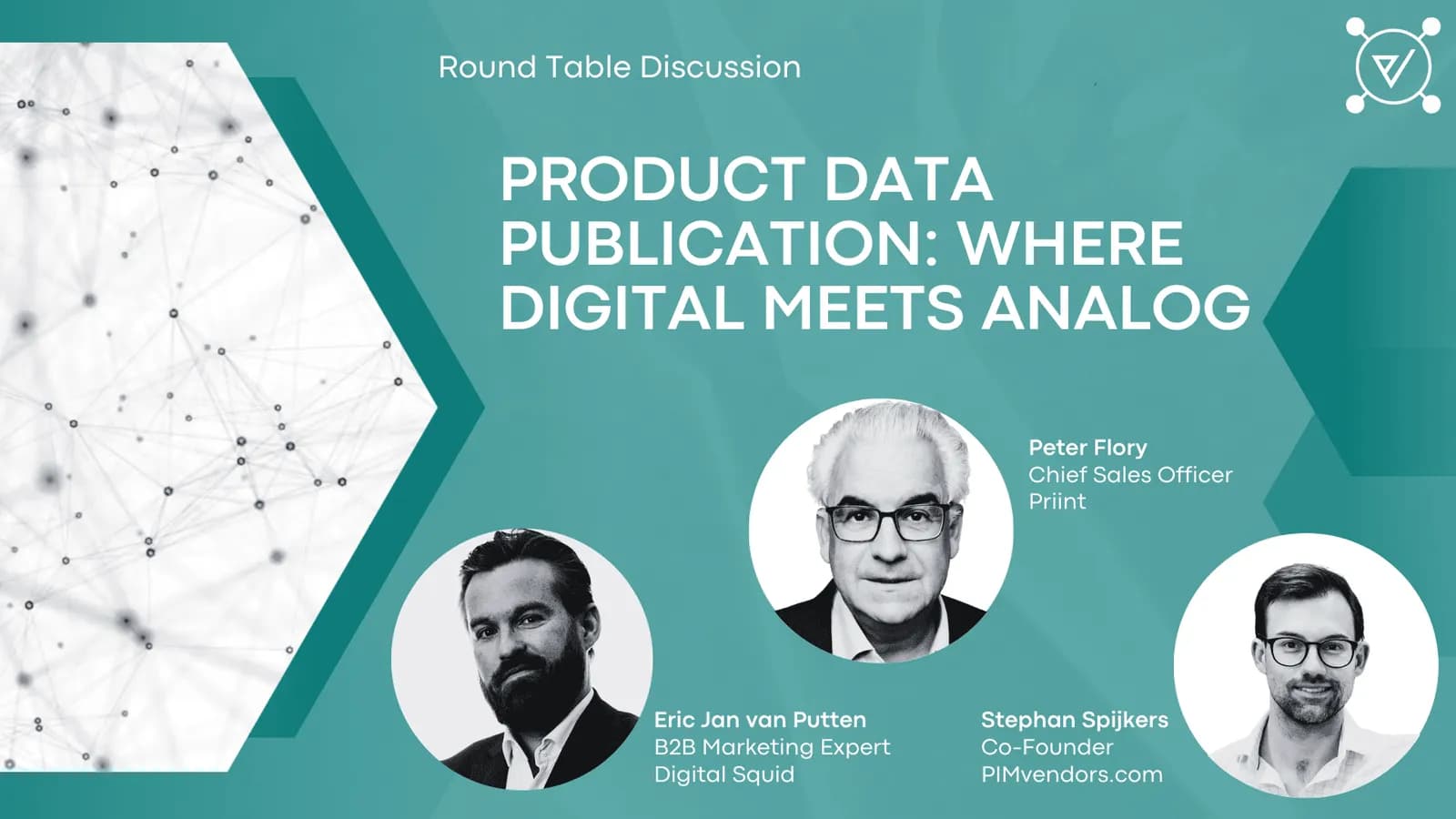
Print is another channel on the same product record. If that record is incomplete, the PDF and the web page fail together. That is the buyer point from the publication session with Peter Flory and Eric Jan van Putten.
Speakers:
- Stephan Spijkers, Co-Founder, PIMvendors.com
- Peter Flory, Chief Sales Officer, priint
- Eric Jan van Putten, B2B Marketing Expert, Digital Squid
The session put three topics on the table. Priint as a publishing channel, and why that channel is a commercial choice rather than a design leftover. The dependence of any of this on product data that is already fit to publish, which means a PIM people actually maintain. Automation in print production, including publishing that can vary by audience, which only pays when the data underneath can support the variation.
Flory's seat is the publishing system. Van Putten's is the marketing use of it. The PIM sits underneath both. A page that looks personal and a catalog that looks finished can still share one wrong attribute, and then both channels repeat it.
Ask this before you add a publishing tool:
- What the tool reads from the PIM, field by field, and what it still expects in a side file.
- Who approves a page when the layout is generated and the claim on it is yours.
- Which channels still leave as a manual export, because those are the ones that will drift first.
Onboarding, enrichment and publication are one process. Print is the publication stage, described in the product data process. The experience on the page, paper or screen, still starts from the record. That is the argument in what PXM stands for. Where a publishing tool sits next to PIM, ERP and the rest of the stack is mapped in the commerce stack explained. Templates, channel outputs and approval steps belong in PIM features and capabilities.
Diagnostic
Do you actually need a PIM?
Run the complexity index before you budget software or hire an SI.
Budget
Model a first-pass TCO
Translate catalog shape into a three-year cost range in under ten minutes.