
Signal
Omnichannel Session: Own the Record, Then Vary It by Channel
Elina · 2025-10-24 · Updated 2026-10-19 · 3 min read
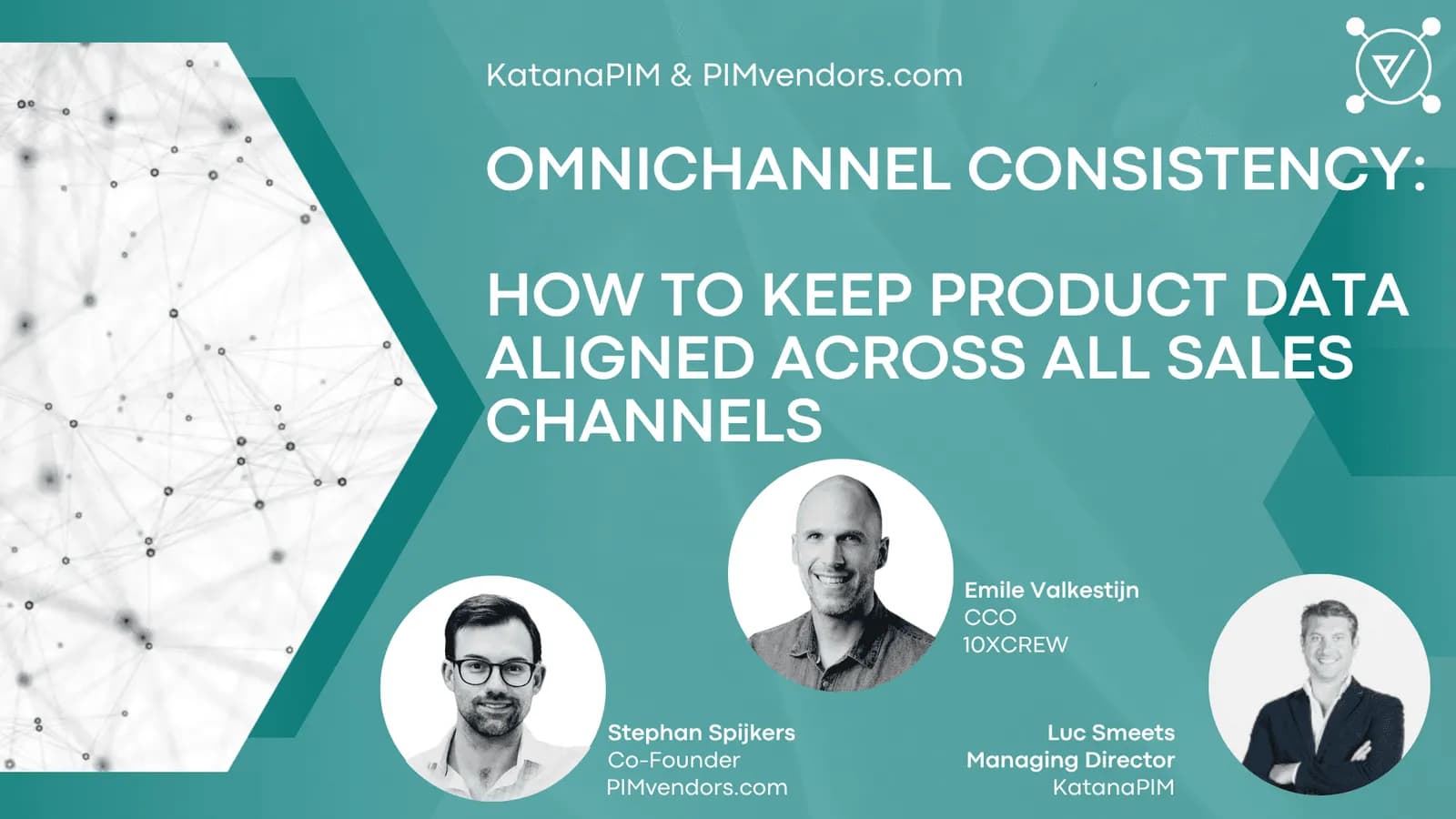
Own the product record, then publish the variant each channel will actually accept. That is the working rule from this session with Stephan Spijkers (PIMvendors), Luc Smeets (Managing Director, KatanaPIM) and Emile Valkestijn (Chief Commercial Officer, 10XCREW).
Consistency across Amazon, Bol, OTTO, your own shop, an app and the store is not one identical payload everywhere. Each channel wants its own cut of the same facts. The failure mode is a brand that lets the channel write the story, or a team that sets the feed up once and stops looking. PIM and marketplaces covers the channel side of that job: what has to be true in the record before a listing can stay aligned.
Speakers
- Stephan Spijkers, Co-Founder, PIMvendors.com
- Luc Smeets, Managing Director, KatanaPIM
- Emile Valkestijn, Chief Commercial Officer, 10XCREW
What they told the room
The brand has to own the content. Nobody else tells the product story with your commercial intent intact. A PIM is the place that ownership sits: one record, then a controlled variant for Amazon, Bol, OTTO, the webshop, the app and offline.
Start with a small set of attributes and widen it when you can see which gaps actually cost sales. A full model on day one freezes the project. Excel can hold a small catalog. It stops working once the same product has to stay straight across countries and channels, because nobody can see which copy is current.
"Set and forget" is how aligned launches drift apart. Someone has to keep watching the live listings. Marketing and e-commerce have to agree the message before the feed goes out, or you get two versions of the product and a slow argument after the fact.
The session's push on selection is to stop the endless comparison. Done, with a record you can correct, beats a perfect shortlist that never goes live. AI and automation help after that connection exists: translation, localisation, enrichment and A/B tests only stay honest if they read and write the PIM, not a side file.
What to do with this
Pick the two channels that take the most revenue and write the attribute set they both require, plus the extra fields only one of them demands. That is the first cut of the model. The trade-off of starting small is that some channels will look thin for a while. The trade-off of starting complete is that you are still modelling when the peak season listing should already be live.
What PIM is is the short account of the record those channels should share. The rules for what "complete" means per channel sit in product data quality and governance. Without that bar, "aligned" is a feeling, and the next marketplace export will disagree with it.
Diagnostic
Do you actually need a PIM?
Run the complexity index before you budget software or hire an SI.
Budget
Model a first-pass TCO
Translate catalog shape into a three-year cost range in under ten minutes.